

Swimming is a universal activity suitable for all ages, offering numerous benefits for health, appearance, mood, and overall well-being. During the hot summer months, New Yorkers can enjoy swimming in public pools, many of which are located in parks. Learn more about free public pools in the city and Queens at queens.name.
It All Began with “Floating Baths”
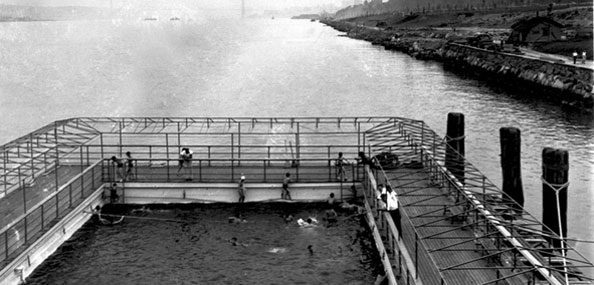
In the early 19th century, New York had “floating baths,” which became increasingly popular after the Civil War. Public health advocates campaigned for the establishment of municipal baths, leading to the first free floating baths appearing on the Hudson River and East River in 1870. By 1890, the city boasted 15 such baths.
These rectangular floating structures were mounted on pontoons, featuring changing rooms and offices around their perimeter, with river water flowing through a central cavity lined with planks. Floating baths were typically anchored near tenement houses, attracting both experienced swimmers and novices. They operated from late June or early July until October, with over a million users by 1911. By the 1920s, pollution in city rivers rendered them unusable, leading to the gradual decommissioning of these facilities.
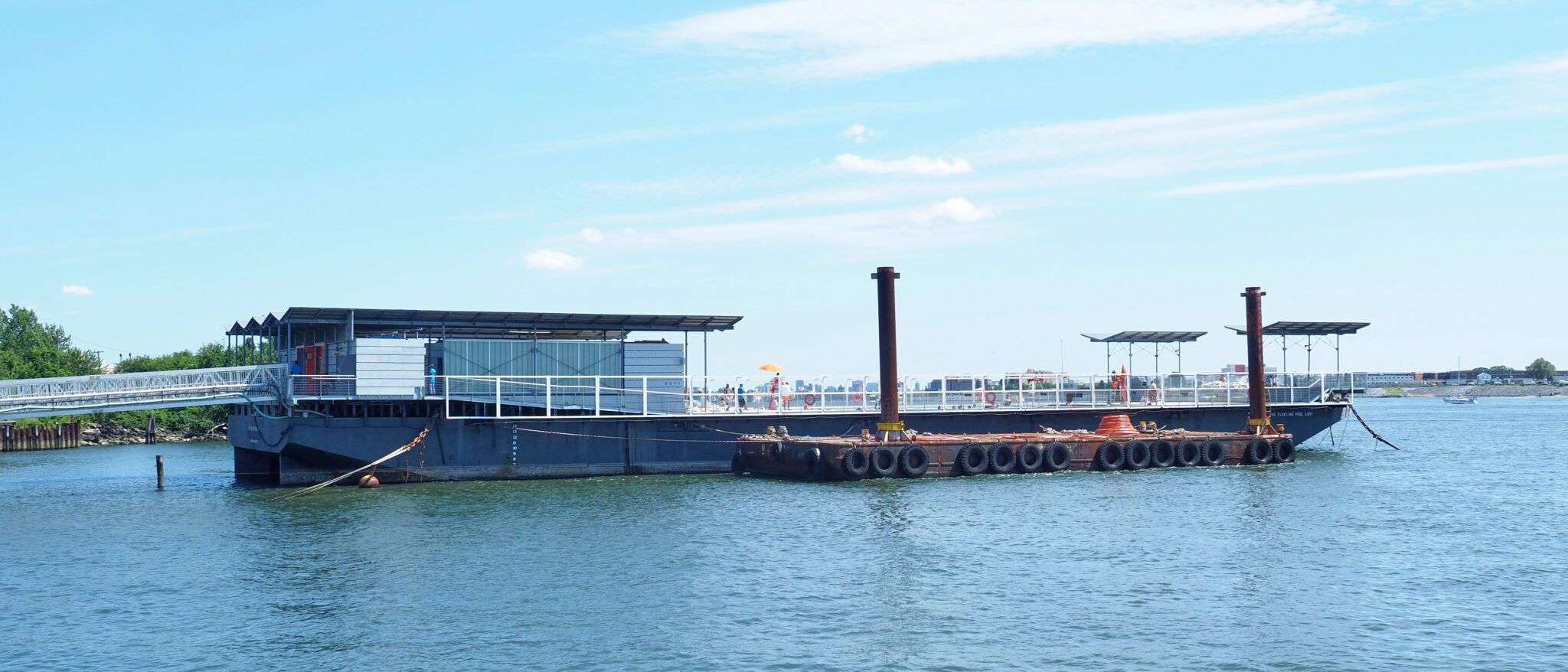
In 2007, urban planner Ann Buttenwieser revived the concept with the Floating Pool Lady, a modern mobile pool on the East River. Built on a repurposed barge, this free pool includes seven 25-meter lanes and features an artificial beach with volleyball. As of June 2024, it remains the only facility of its kind in the U.S.
Public Baths
Predecessors to modern pools also included public baths. Dr. Simon Baruch, a proponent of hydrotherapy, pushed for social reforms advocating public baths. In 1895, New York State passed legislation requiring free public baths in cities with populations over 50,000. New York City Mayor William L. Strong established public baths used for bathing and cooling off during hot weather, primarily located in immigrant neighborhoods.
Modern Pools
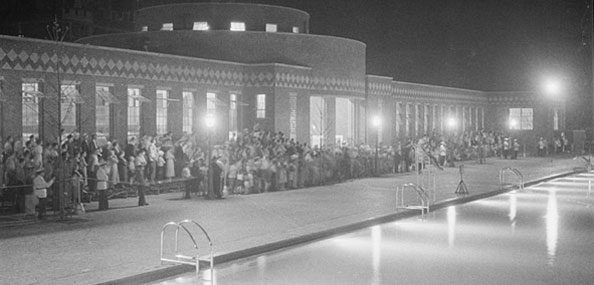
In the 1930s and 1940s, New York’s Parks and Recreation Department assumed responsibility for municipal baths and collaborated with the Works Progress Administration (WPA) to build outdoor pools.
WPA pools were celebrated as some of the best public recreation facilities in the U.S., offering advanced design and technology, including state-of-the-art filtration and chlorination systems. Pools became a favorite spot for athletes and children alike. In 1936 alone, 11 pools opened in city parks. Designers tailored each facility to its location and topography, incorporating heating systems and underwater lighting for a superior swimming experience.
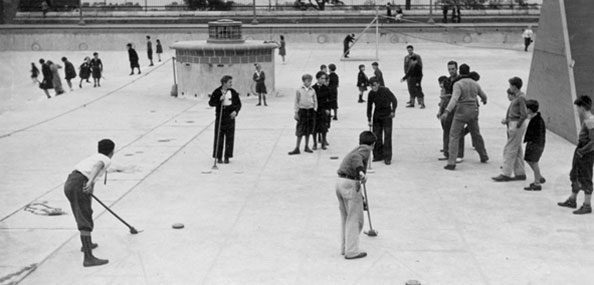
During colder months, pools served as sports courts for paddle tennis, shuffleboard, volleyball, basketball, and handball. Some even doubled as roller rinks, boxing gyms, or dance halls.
The first Olympic-sized pool (50m x 25m) opened in the Bronx’s Van Cortlandt Park, costing $1.6 million. It included three smaller pools for children, diving, and competitive swimming.
Temporary Mini-Pools
In 1966, a program introduced “portable pools” to provide swimming facilities in underserved areas. These mini-pools, costing $25,000 each, were designed for easy relocation. By 1969, New York had 30 mini-pools operating from July to mid-August, primarily serving children. However, the lack of changing areas meant swimmers had to arrive in their bathing suits. As larger, permanent pools were built, demand for temporary pools declined. By 1996, only 17 mini-pools remained.
Pools in Queens
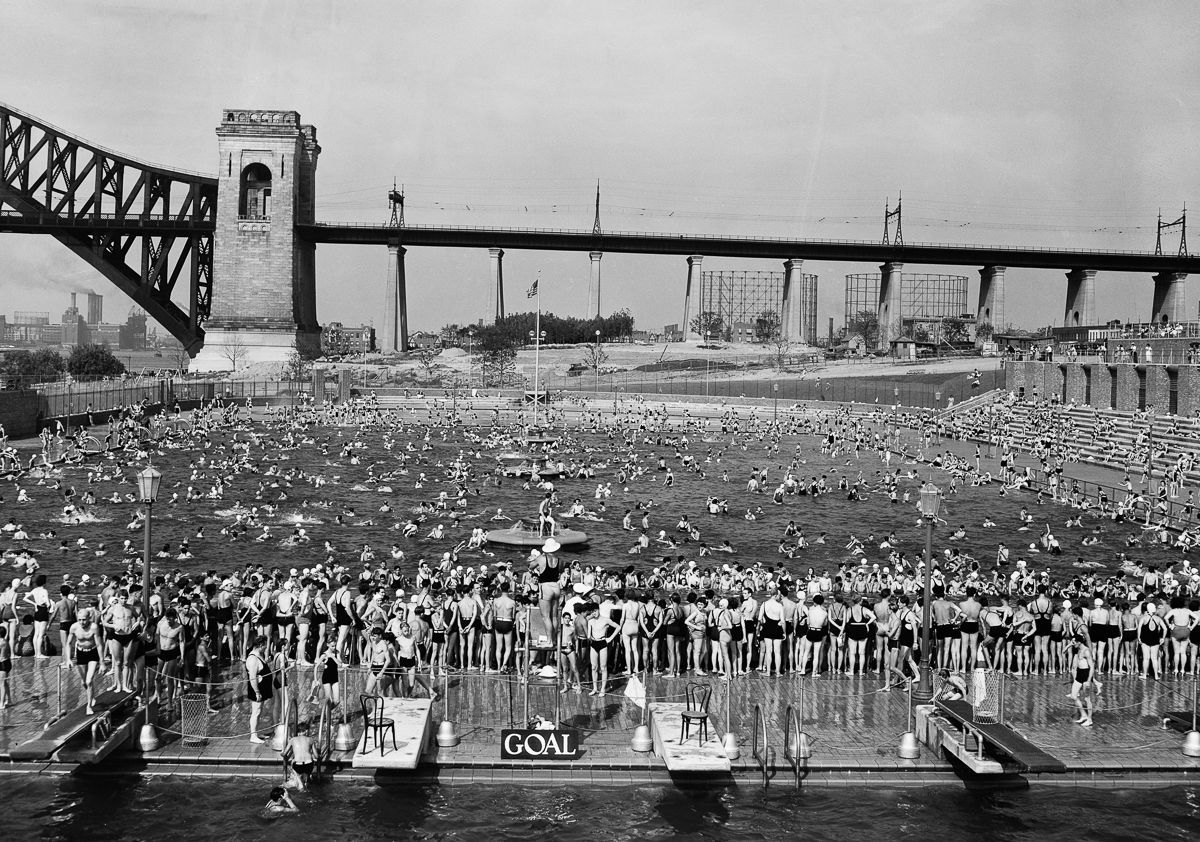
By the 2020s, Queens parks featured seven outdoor pools, including three mini-pools and two indoor facilities. The largest, Astoria Pool, opened on July 2, 1936, and remains the largest in both Queens and New York City. Astoria Pool hosted U.S. Olympic trials for swimming and diving on July 4, 1936. At its peak, the facility could accommodate 6,200 swimmers. Its concrete deck, surrounded by bleachers and a brick wall topped with wrought iron fencing, remains iconic.
Astoria Pool is located in Astoria Park, a picturesque area along the East River. The park includes a running track, soccer field, 14 tennis courts, a playground, basketball courts, and bocce courts. Historically, the park’s grounds were home to an Indigenous settlement known for fishing and growing corn.
Practical Tips for Visiting Public Pools
During summer, thousands of visitors flock to New York City’s free public pools daily. Be prepared with a swimsuit, a white T-shirt or hat for sun protection, and sunscreen, which is often provided for free. Those who are not strong swimmers can take advantage of free lessons. Small children should wear swim diapers.
Leave food, glass bottles, electronic devices, and newspapers at home to prevent littering and damage. Avoid bringing valuables like jewelry or credit cards. Be aware of potential long lines during peak times; pool staff may implement timed sessions or limit swimming durations to accommodate more visitors. Pools are also accessible to wheelchair users.