

Flushing Meadows Corona Park, or simply Flushing Meadows, is a public park in North Queens. In the 20th century, it became a venue for two World’s Fairs. The location serves as a time capsule, preserving the history of the exhibitions while also hosting social and cultural events for both locals and tourists. People from all over the world come here to visit festivals, sports venues, lakes, museums and theaters, and sample masterpieces of international cuisine, among other things. Learn more about the park’s history and what makes it special at queens.name.
Created for the fair
The concept for the park emerged while preparing for one of the world’s most iconic events, the World’s Fair. This is an international fair that serves as a symbol of industrialization while also providing an open platform for demonstrating technical and technological advancements.
In 1939, the park hosted the largest international exhibition ever held in the United States. It displayed technological advances and a vision of the future. As many as 10,000 trees were planted on the territory on the occasion of this event! Following the exhibition, New York Parks Commissioner Robert Moses saw the possibility of employing green space even after the festivities ended. To make this idea a reality, 450 people put in countless hours of work. However, the outbreak of World War II made its own adjustments. During the war, the park saw the building of an ice and roller rink, as well as a public swimming pool. Since 1946, some of the World’s Fair buildings have served as temporary headquarters for the United Nations.
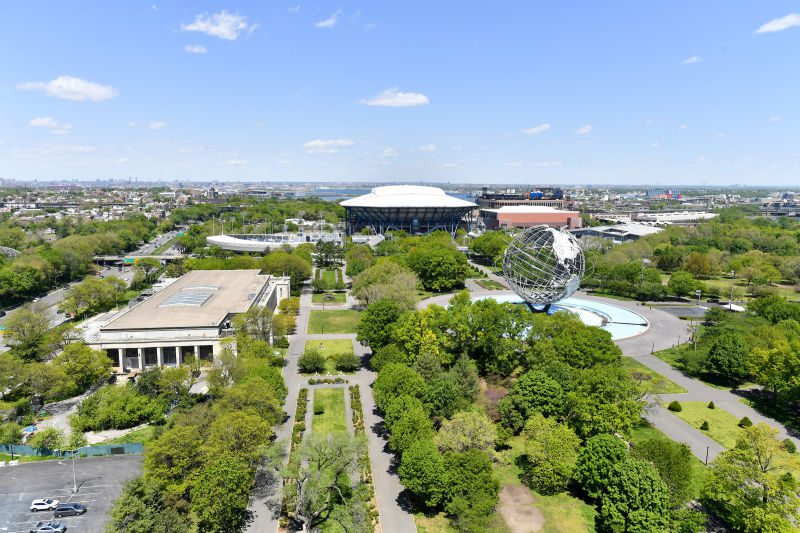
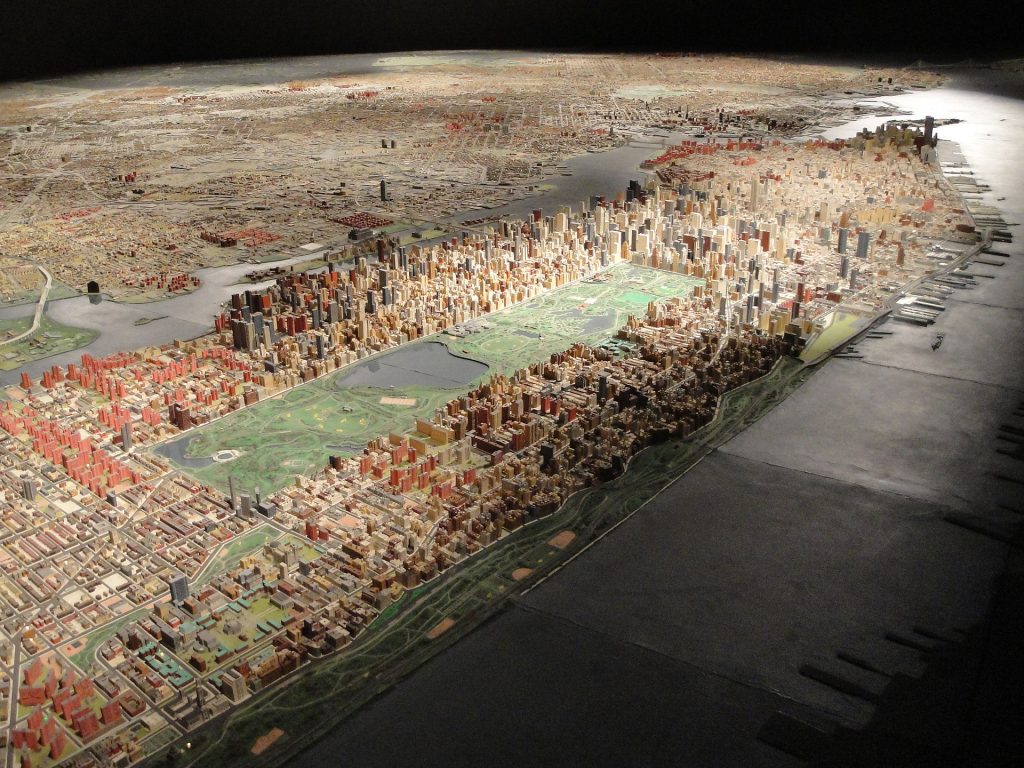
In 1964, the park hosted its second World’s Fair. For the occasion, they built a steel model of the globe known as the Unisphere and opened the New York City Pavilion, the New York Hall of Science museum, Terrace on the Park, Queens Botanical Garden and Shea Stadium. The Pavilion displayed a panoramic view of New York, a gigantic model of the entire city.
Following the 1964 fair, the city used the remaining funds to create the park. It was officially opened in 1967. After a few years, the park fell into disrepair, and wild animals returned here. The area was rehabilitated 20 years later. Interestingly, the park is called after the nearby neighborhoods of Flushing and Corona, which it separates. The word “Flushing” is a distorted name for the Dutch port city of Vlissingen.
Entertainment for the entire family
Visitors from all over the city come to Flushing Meadows for the entertainment. Here, you may play football, tennis, baseball and volleyball, as well as visit a wildlife conservation center, a recreation center, an ice rink and an Olympic-sized indoor pool. Additionally, there are several trails for hiking and cycling and lakes for water activities.
There is a good spot for fishing at Meadow Lake. Yearly, this freshwater pond hosts a boat race competition known as the Hong Kong Dragon Boat Festival. Also, here, you may rent boats for rowing and kayaking. In addition, the lake serves as a rowing venue for the nonprofit Row New York, where teams train throughout the year.
The American Small Craft Association has deployed a fleet of sloop-rigged sailboats, used for teaching, racing and recreation. The territory of Flushing Meadows Park also encompasses Willow Lake. The two reservoirs are separated by an anti-flood gateway. Fish from marine areas frequently swim into Flushing Bay.
During the summer, the park holds a night food market called the Queens Night Market, which sells dishes from different countries. On the third weekend of May, the World’s Fare Food Festival takes place in the parking lot of Citi Field baseball stadium. Citi Field was erected in 2009 to replace Shea Stadium. The park also features a playground that is accessible to people with disabilities. The park features three Metropolitan Transportation Authority service facilities: the Jamaica and Corona metro stations, as well as the Casey Stengel Bus Depot.
Interestingly, at the end of the twentieth century, thousands of people attended night religious ceremonies on various holidays. For example, an event in June 1983 drew up to 15,000 pilgrims.
Remnants of the World’s Fairs
Flushing Meadows features many monuments and structures from the 1939 and 1964 fairs. Remaining intact since 1939 are the Meadow Lake boat house and the Queens Museum.
The main symbol of the 1964 fair is the Unisphere. Since then, the sculpture has become the park’s main and most recognizable landmark. The sculpture’s height is 43 meters. Steel components represent the world’s countries, while three steel rings represent the first artificial satellites that orbit the Earth. The sculpture is surrounded by fountains. Other notable 1964 monuments include Forms in Transit, the Rocket Thrower and Freedom of the Human Spirit.
It’s also worth visiting the New York Hall of Science, which was one of the country’s first science museums. The park also contains two time capsules that are marked with a granite monument. The New York City Pavilion has also been preserved.
The US Open tennis tournament
In 1978, the USTA Billie Jean King National Tennis Center began hosting the US Open tennis tournament in this park. This is the fourth and final Grand Slam tennis tournament. It lasts two weeks and takes place every August and September.
The championship is one of the oldest tennis championships in the world, originally known as the US National Championship. This is the only Grand Slam event that has been unaffected by both World Wars and the COVID-19 pandemic. Every year, nearly 700,000 people from around the world attend the event. Proceeds from ticket sales, sponsorship and television contracts are used to develop tennis in the United States.
By the way, right next to the Tennis Center is Eric Fishl’s sculpture Soul in Flight, a bronze nude statue that serves as a permanent memorial to American tennis player Arthur Ashe. The statue is engraved with one of the athlete’s favorite quotes:
“From what we get we can make a living; what we give, however, makes a life.”
Queens Museum
Queens Museum is an art museum and educational center in Flushing Meadows, founded in 1972. The institution is dedicated to presenting high-quality art and educational programs to New Yorkers. Through a wide, comprehensive program of exhibitions, educational projects and community events, the museum pays tribute to the area’s history and diversity of communities.
The museum’s permanent collection consists of around 10,000 exhibits. Here you will find a collection of windows, lamps and other glass objects created in New York by Louis Comfort Tiffany between 1878 and 1933. Louis Comfort Tiffany was an American artist and designer renowned for his magnificent artistic creations in colored glass, ceramics, precious stones, enamels and metals. The great decorator of the American Golden Age was one of the most innovative designers of the time.
The most well-known exhibit at the museum is Robert Moses’ Panorama of New York City, which was commissioned for the 1964 World’s Fair. It depicts city buildings from all five boroughs of the city. The Panorama has become one of the fair’s most popular attractions. After the exhibition was completed, it was renovated multiple times to include new structures in the layout.