

The Queens County Farm Museum is a farm museum that depicts the history of agricultural life in New York. This farm has supplied the city’s needs for hundreds of years and continues to do so today. Farm buildings, fruit and herb gardens, fields, vineyards and animals all bring history to life. Learn more at queens.name.
First owners
The farm’s first owner was John Harrison. In 1697, he sold it to the Dutchman Elbert Adriance, whose family managed the property for over a century. In 1808, the land was purchased by John Bennum Sr., who cultivated it until he died in 1822. Following that, his son ran the farm for some time. The Bennums faced numerous misfortunes, including severe droughts in 1819 and 1822. In 1817, the Queens Agricultural Society was formed to bring together local landowners.
In 1822, Daniel Lent purchased the farm. During the years of his ownership, the land experienced several droughts and floods. In addition to dealing with natural disasters, Lent faced the rapid development of new technologies. In the early 1800s, the iron plow replaced the Dutch plow. In addition, mechanized threshing machines, potato harvesters, hay mowers, iron harrows and other modernized equipment have emerged.
Small farmers had a difficult time adapting to technological advancements. In 1827, the farmer’s publications The American Farmer and The New York Farmer appeared, helping to understand the innovations of the industry. Five years later, the New York State Agricultural Society was founded, marking the start of the agricultural sector’s transformation into a major industry.
In 1833, Lent sold the farm to Peter Cox. At the time, agriculture in the United States was still growing rapidly. By 1855, Cox had more than doubled the modest three-room farmhouse built by the Adriances. Until the end of his life, Cox produced mostly wheat, corn and subsequently potatoes for local sale. When his son Henry joined the Queens Agricultural Society in 1872, he focused on market crops. By 1879, Henry Cox had become the largest producer of market crops in Queens.
In 1900, Daniel Stattel became the new owner of the farm. Back then, it was the second largest and most expensive farm in Queens (its cost was 32,000 dollars, 3,000 dollars more than the largest farm in the county). The Stattels erected a windmill, renovated existing structures, added outbuildings and purchased modern agricultural equipment. They also were the last private family farmers who owned the property.
Transition to state ownership
In 1926, the farm was bought out by real estate investor Pauline Reisman. Less than six months later, she sold it to New York State for use by Creedmoor State Hospital. The medical facility used the farm to produce fruits and vegetables for the hospital kitchen, as well as grow ornamental plants and bushes.
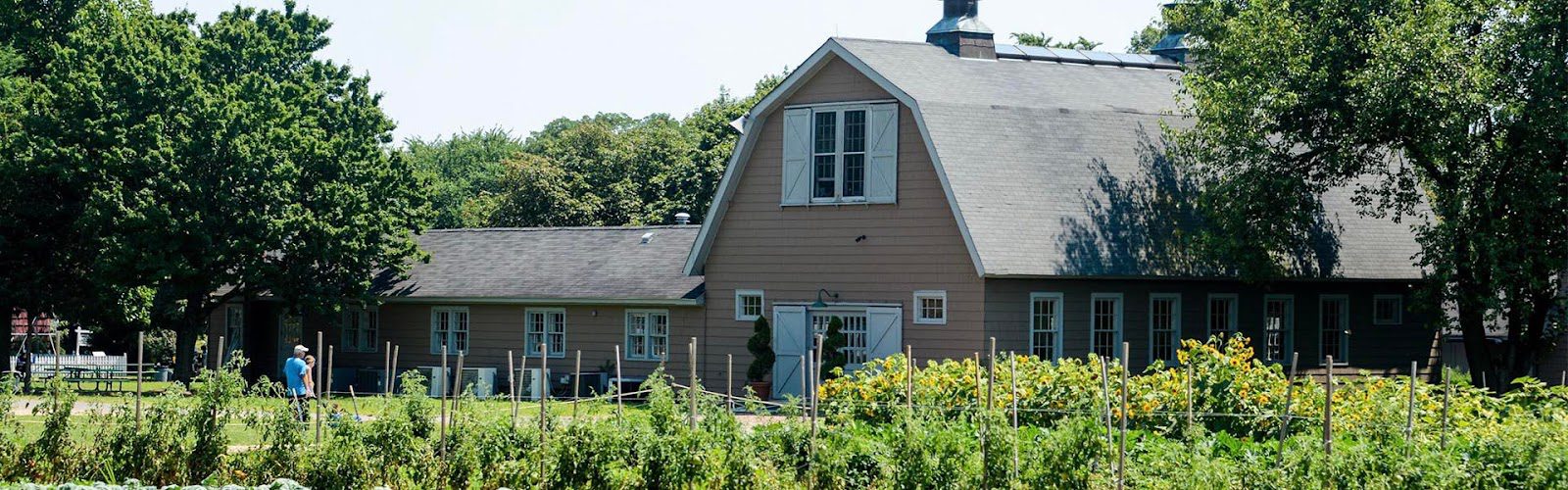
The management of the institution dismantled all of the buildings on the farm and replaced them with those that met medical requirements. Historical buildings were demolished, but new ones arose, serving as the foundation for the future museum. Although buildings erected before World War II are rarely preserved, local institutional structures from the 1930s remain standing.
The second most significant cultural institution in Queens
The Queens County Farm Museum is a historic landmark in New York City that is listed on the National Register of Historic Places. The museum was founded by James A. Trent. In 1975, Trent, along with New York State Senator Frank Padavan, prohibited any new construction on the property. The same man, Frank Padavan, arranged for the property to be transferred to the New York City Department of Parks and Recreation. All significant structures have been repaired. In 1975, the museum’s founders were granted the status of a memorial sign for the buildings and surrounding area, and they worked tirelessly to open the place to the public.
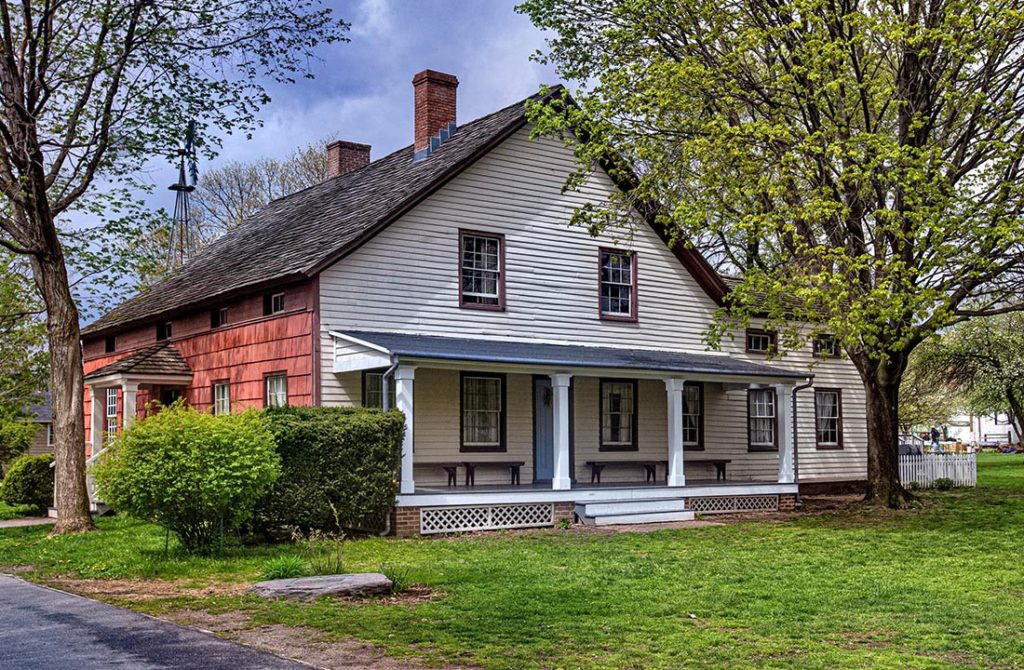
The museum provides a variety of educational programs, public events and services. The farm welcomes around 500,000 people every year. According to some sources, it is the second-largest cultural institution in Queens.
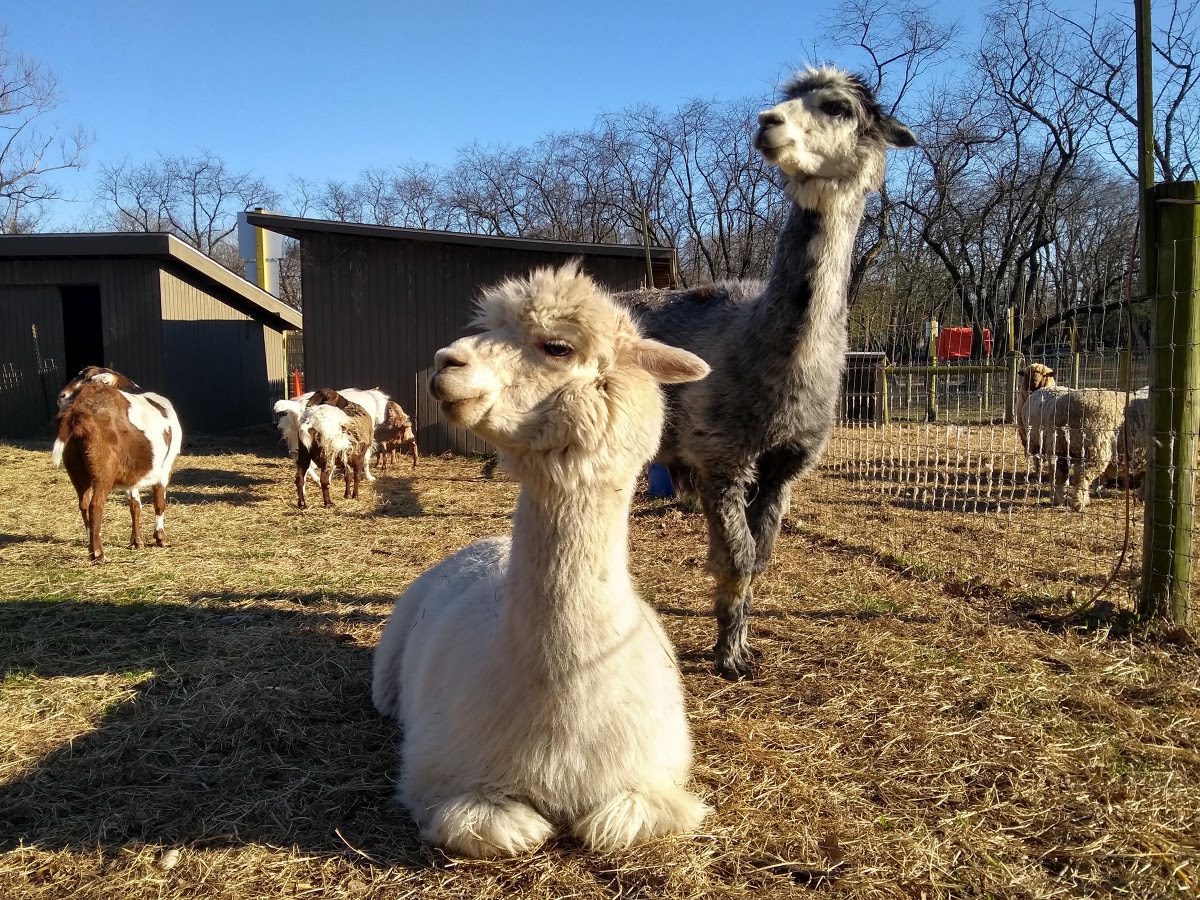
The central part of the complex is the farmhouse built by the Adriances in 1772 and originally consisting of only three rooms. The farmhouse and adjacent historical area demonstrate the evolution of this unique piece of land. The museum educates visitors on how farm goods get from the field to the table. Notable features of the farm also include arns and outbuildings, fruit and herb gardens, an apiary, a greenhouse complex and the animals themselves.
In 1986, the farm was renovated. Simultaneously, a master plan for the territory’s development was prepared. Two years later, the New York State Council on the Arts funded an interpretive planning study. Both of these efforts were carried out with the assistance of experienced external specialists who worked with farm staff and the board of directors. In 2009, Quennell Rothchild & Partners began developing a revised master plan for the museum.
Operation of the farm
In addition to being a museum, Queens County Farm Museum is a functioning farm that produces food. There are over 200 crop varieties grown here, with the majority being annual vegetables. In addition, there are perennial fruits, perennial vegetables, flowers, herbs and pollination plants.
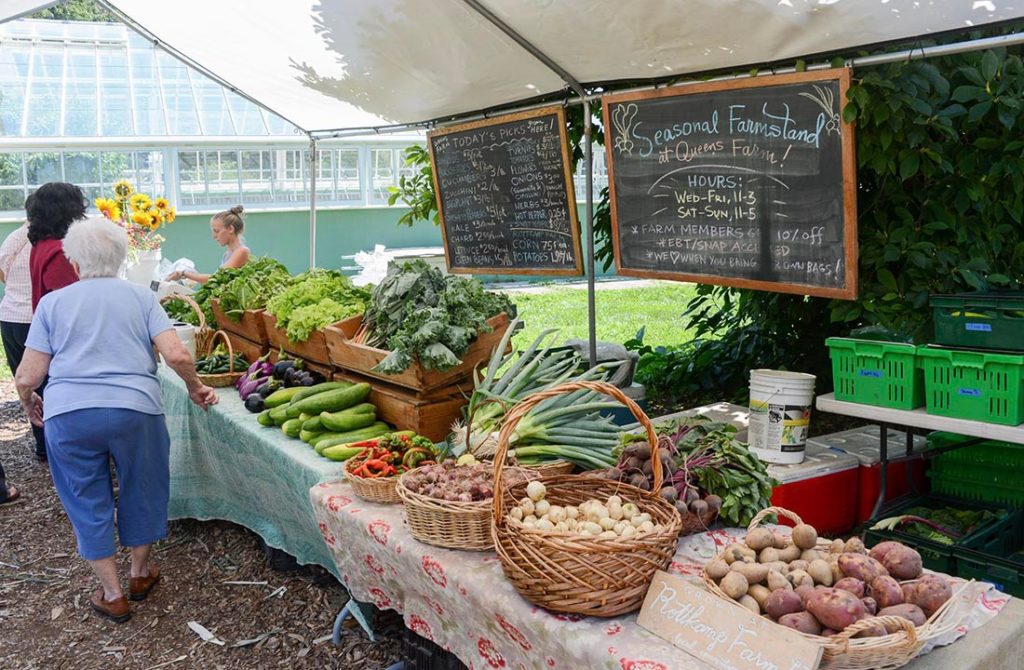
The farm employs regenerative agricultural practices, a method of food production that balances environmental conservation, community development and economic viability. This promotes renewable farming and ensures better land use in the future.
Organic farming allows the use of organic pesticides, and in regenerative agriculture, on the other hand, protecting the environment is the primary goal. Thanks to the interaction of different systems working together, the number of pests and diseases of crops is minimized. The farm is continually evolving into a more productive ecosystem.
Similar careful methods were used in ancient times: during colonial times, agricultural instruments powered by animals were used to plow the soil, which was subsequently manually cultivated by farmers.
At the Queens County Farm Museum, a tractor is used to prepare planting beds for crops in the spring, which are then planted using hand tools and simple equipment. Farmers take great care of their plants from the moment they are sown until they are harvested. Additionally, the following regenerative methods are utilized here:
- crop rotation (involves changing crops annually in the same field)
- mulching (involves applying a biodegradable material to the soil surface)
- cultivation of cover crops (cereals and some row crops like rye, wheat, barley, oats, corn, millet, etc. that provide cover for newly sown crops while they develop)
- sowing intercrops (which are sown before sowing or after harvesting the main crop, and they yield in the current year)
- planting hedges – perennials that frame the territory.