

Residents of the United States produce three times more waste than the average global citizen. Read more about how garbage is disposed of and where it was discarded in different years in the multi-million city of New York and Queens in particular, at queens.name.
From ocean dumping to incineration
Waste management has been a problem for New York since the 17th century. Back then, residents would throw ash, dead animals and similar items directly on the streets. During the 1880s, most of New York’s waste was dumped into the Atlantic Ocean. In 1895, Commissioner George Waring devised a waste management plan that prohibited dumping trash into the ocean. At the same time, the city began to recycle waste. The police department, headed by Commissioner Theodore Roosevelt, oversaw this process.
Household waste was divided into three categories:
- leftovers, which were processed with steam to create lard for soap products and fertilizer
- paper and other commercial materials
- ash, which was taken to landfills.
World War I interrupted the waste recycling process due to a shortage of labor and materials. At that time, garbage was again dumped into the ocean. In the 1930s, the city stopped this practice and incinerated refuse at special plants, transporting ash to landfills. In the 20 years following the war, the New York City Department of Sanitation built 22 waste incineration plants and opened 89 landfills.
In 1964, there were only 11 waste burning plants operating in the city, in 1972 – 7, in 1990 – 3, and by 1994 there were none left. Refuse incinerators dispose of industrial and solid household waste through thermal decomposition in boilers or furnaces.
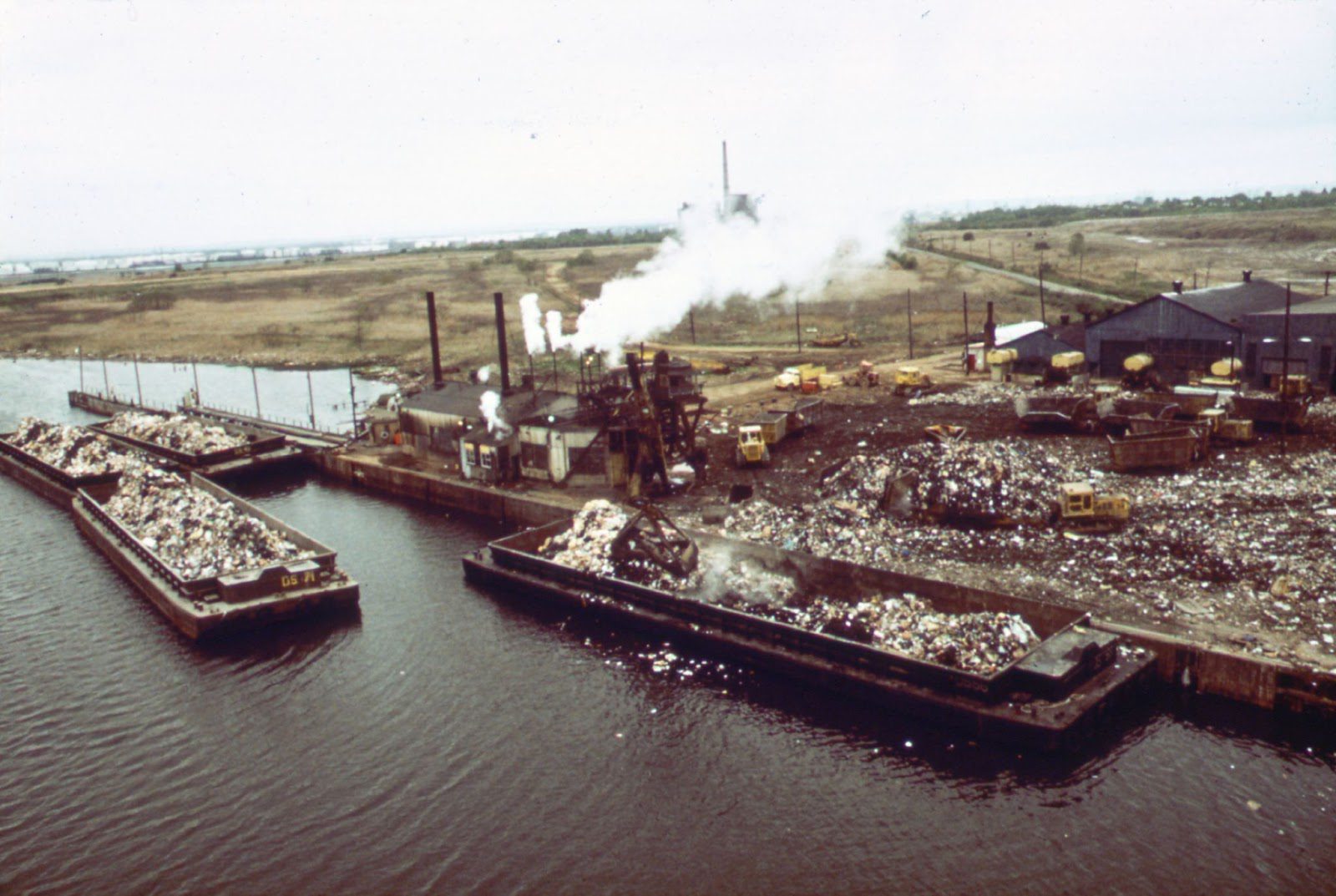
By 1991, 6 landfills in the city were shut down because they were overflowing. From then until 2001, the city had only one dump site, the Fresh Kills Landfill, located in the borough of Staten Island. From 1955 until its closure, it was considered the largest landfill in the world. This site began to be transformed in 2008 into a public space, Freshkills Park.
Department of Sanitation
In 1881, the Department of Street Cleaning was established in response to public protests over the city’s littered streets. In 1933, it was renamed the New York City Department of Sanitation. It maintains waste collection infrastructure and hires state and private contractors to remove municipal waste.
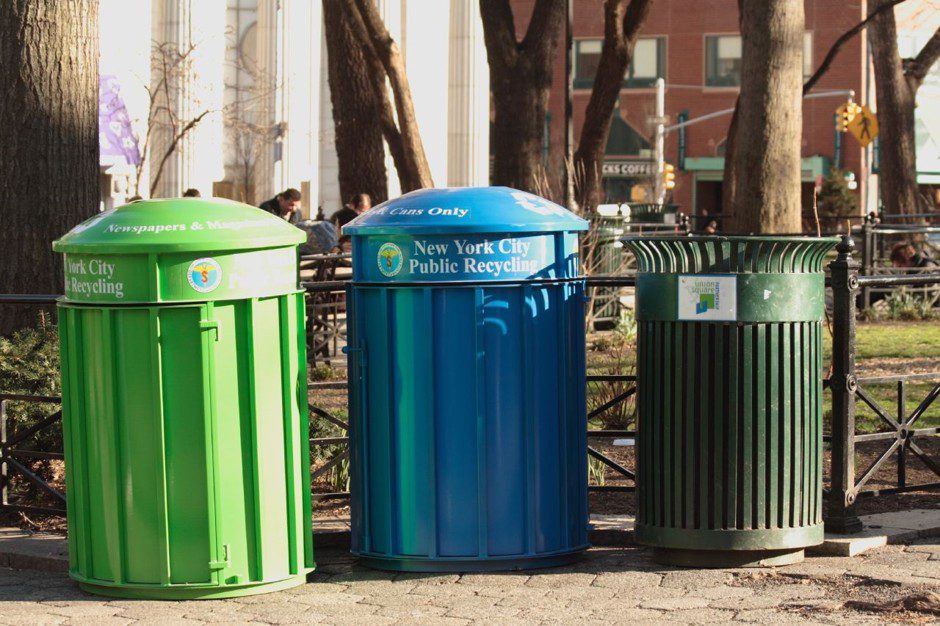
The department collects waste bags from the roadside several times a week. In addition, garbage is collected from special containers placed at street corners in commercial areas throughout the city. The department’s road sweepers remove over 100 tons of dust, dirt and trash from the streets every day. Commercial streets are swept at night or early in the morning, while residential areas are cleaned during the day. Property owners are required to clean the sidewalks and the street section near the curb.
Mandatory Recycling
Voluntary recycling for residential buildings was introduced in New York City in 1986. This process became mandatory three years later. By 1997, all boroughs were recycling the same materials. The September 11 attacks caused a budget crisis, leading to cutbacks in the recycling program. The collection of certain materials was temporarily suspended from July 2002 to April 2004. By 2005, it was restored to its previous level.
In 2017, the city obliged enterprises to process waste as well. When China stopped importing waste in 2018, the recycling market in the USA destabilized again. Since China was taking plastic, the United States faced an excess of polyethylene, polyvinyl chloride, polypropylene, polystyrene and so on.
At the beginning of the 21st century, the Royal Waste Services company was opened in the Jamaica neighborhood of Queens. The company offers sustainable waste reduction strategies and recycling programs. A team of environmental advisors works with commercial enterprises throughout New York City. Royal Waste Services is a certified waste removal contractor by the US Green Building Council. The company collects waste from designated locations on a daily basis or according to a specific schedule. Additionally, they provide services for renting trash containers, organic composting or shredding and waste recycling.
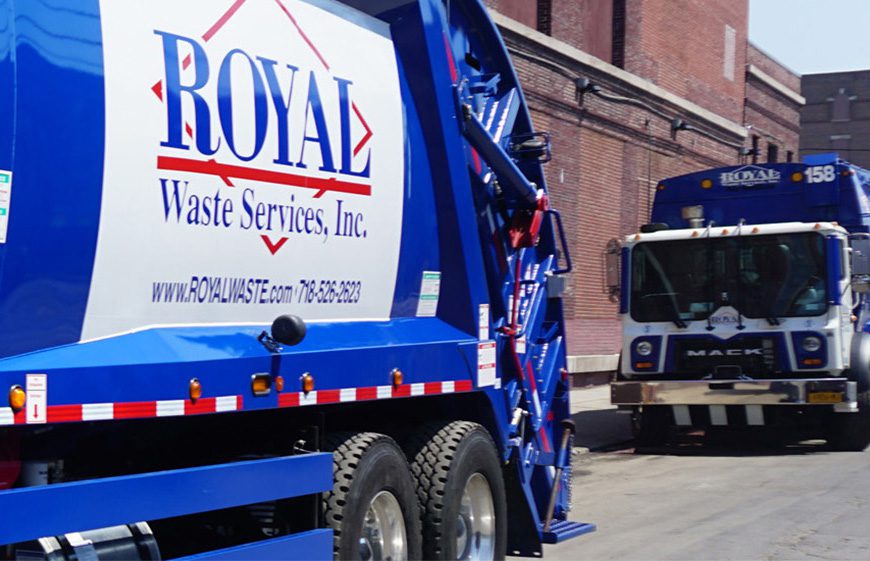
Royal Waste Services utilizes special trucks for organic composting. Each truck is equipped with tablets that provide the driver with all the necessary information about the route. Using these tablets, drivers also take photos and record any issues that arise at the waste collection point. These trucks serve clients in all 5 boroughs of the city and three other states in the country.
When the pick-up process is marked as completed, customers receive notifications via email or text message. With just one touch of the screen, they can request additional garbage removal, rent a specific facility, pay bills, access reports and indicator analysis and more.
This is one of the first New York waste recycling companies for commercial clients. Every year, it removes approximately 300 million pounds of recyclables from landfills, thus significantly reducing greenhouse gas emissions.
In addition, the team of Royal Waste Services trains clients on the rules of ecological waste disposal. Eco-consultants work with commercial enterprises, ensuring they comply with all sanitation laws of New York.
Composting as a Solution
One-third of food is simply thrown out in the trash. From small household bins, leftovers end up in large landfills. Organic waste in dumps produces methane outburst into the Earth’s atmosphere. This gas enhances the greenhouse effect and creates a fire hazard situation in landfills. Through composting, household organic waste can be converted into fertilizer and even soil. Composting can solve two problems at once. It disposes of organic remains and addresses the issue of nutrient-soil deficiency for flowers or vegetables.
New York began composting for the first time in Staten Island in 2012. In 2020, due to budget cuts related to the COVID-19 pandemic, the city suspended this procedure. Queens became the first borough in the city to resume composting in 2021.
Residents put collected leaves, food scraps and food-stained paper in brown containers placed at the side of the road. Additional organic waste from the yard can be placed in a paper bag or a clear plastic bag. People usually put branches next to trash cans and bags. Separating leaves from the rest of the garbage is a mandatory requirement. Violation of waste sorting rules is subject to fines.
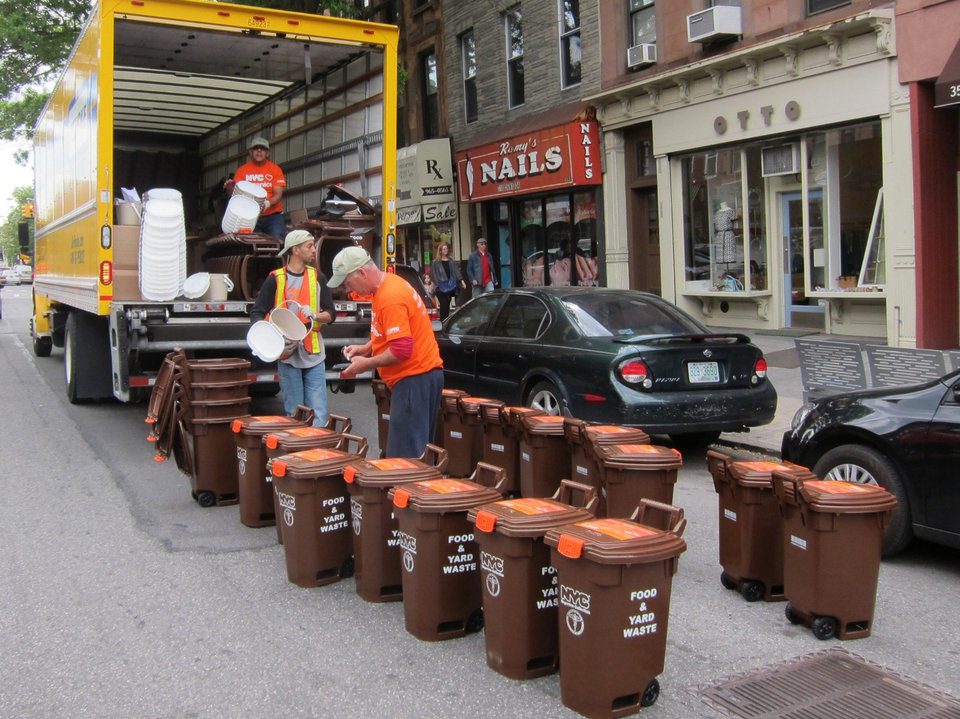
Yard organics, leftovers and food-stained paper are compostable. Diapers, personal care amenities, animal feces, wrappers, non-paper packaging, styrofoam products and recyclables cannot be composted. The main components for compost formation include organic waste, substrate (biodegradable material with high carbon content, such as dry plant remains and wood), air and moisture. In early 2023, New York City Mayor Eric Adams announced the resumption of composting in other boroughs of the city.