

In August 1972, Stephen Gould and Niles Eldredge announced to the world that species evolution is not a slow and gradual process. It happens at a permanent speed. This idea made a splash in the scientific community. Supporters considered the theory a true revolution, while critics called it anti-Darwinian. Despite everything, Gould became one of the most influential popular science writers of the 20th century. He authored dozens of books on various topics, paradoxically combining the topics of paleontology with art and even baseball. Read more about the famous scientist at queens.name.
Childhood and Education
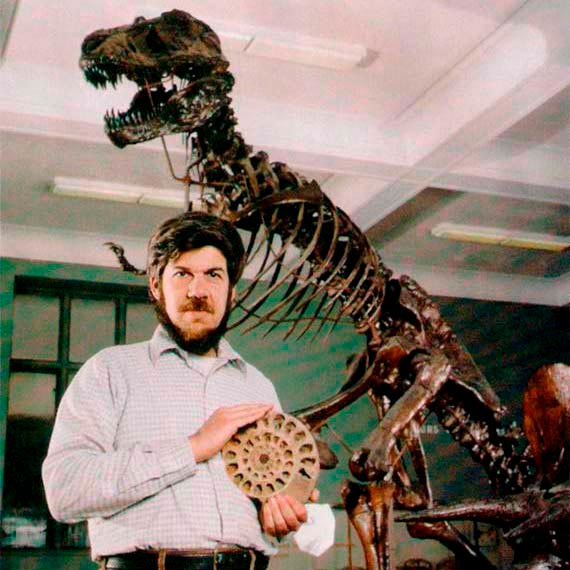
Stephen Gould was born on September 10, 1941, in Queens, to a court stenographer and an artist. At the age of 5, Stephen saw a dinosaur skeleton for the first time at the American Museum of Natural History. It was then that he decided to become a paleontologist.
Gould studied geology and philosophy at Antioch College and the University of Leeds. He obtained a Ph.D. in paleontology from Columbia University and began working at Harvard. Interestingly, Stephen was the first in his family to receive a higher education. Gould’s parents, children of Jewish immigrants from Eastern Europe, supported their son’s interest in education. They always encouraged him to take an interest in social and political affairs.
During his student years, Stephen actively participated in the civil rights movement. He fought against any form of discrimination, especially based on race and gender. In the early 1960s, the New Yorker protested at his university against discrimination of African Americans.

Revolutionary Theory
In 1972, Gould and his colleague Niles Eldredge published the theory of punctuated equilibrium. According to this theory, amphimictic species evolve by leaps that are followed by stagnant periods. Gould reached this conclusion after a thorough examination of snail fossils. Up until that time, it was believed that the process of evolution was continuous and uniform.
The theory of punctuated equilibrium contradicted Darwin’s theory of evolution. However, criticism did not stop Gould. Later, as a professor at Harvard University, he and Richard Lewontin advanced another groundbreaking idea. In particular, the scientists stated that the traits of some organisms are not necessarily the result of natural selection but rather a consequence of their evolution process.

Charles Darwin believed that the struggle for existence and natural selection are the main driving forces of the evolution of all living things. According to the English scientist, these factors and individual genetic variations make species more adapted to their environment with each generation.
To put it differently, Gould believed that some characteristics of living beings are not evolutionary advantages but merely side effects of development. Human reasoning is such an example. Early primates did not have problem-solving skills. Evolutionary mechanisms endowed humans with the ability to read, build houses and lead social and spiritual life. The biologist also used the flamingo as an example of an animal that has evolved. The shape of the flamingo’s beak has developed to support their unique behavior.
Gould emphasized the significant role of chance. He argued that a small asteroid can profoundly change all future life if natural disasters are a matter of chance. He criticized many evolutionary biologists for using only adaptive evolution to explain morphological changes. The scientist opposed the idea of creationism, which holds that the universe, humans and various forms of life on Earth were created by a supernatural force (such as God). In 1982, he testified in court in Arkansas against biblical teachings that were included in natural science programs.
It should be noted that Gould’s theory of punctuated equilibrium does not claim that changes happen in the blink of an eye. It refers to the fact that speciation occurs relatively quickly in terms of the geological time scale. It takes thousands or tens of thousands of years, not millions, as Darwin claimed. When compared to the lifespan of an organism, it is still a progressive change. However, the rate of evolution is extremely rapid and even “abrupt” in regard to the history of the Earth. One of the most famous examples of these sudden evolutionary leaps is the Cambrian explosion.
Writing activity
For many years, Stephen Gould wrote in the journal Natural History. He explained popular science topics to readers in a lively, conversational style. A distinctive feature of Gould’s writing was the numerous analogies he drew between science and his interests, such as music, poker and baseball.
He used metaphors to elucidate the unpredictability of events related to the process of speciation. For example, he described evolution as a movie that could have different endings. Thanks to this bold but simple language, he captured the attention of readers and became one of the most famous popularizers of science of all time.
Gould also published many books that went beyond the scope of evolutionary biology. The paleontologist sharply criticized human sociobiology and evolutionary psychology. The scientist believed that sociobiology could lead to racism and sexism. He was concerned about the resurgence of Social Darwinism and eugenics, which had resulted in racial genocide.
Gould never lost interest in the fundamentals of paleontology. He kept studying fossil remains. In his book “Wonderful Life” (1989), the scientist described the mysteries of the Burgess Shale, a shale formation in the Canadian Rockies. This place hides the world’s largest number of remains of organisms from the Cambrian period.
Stephen Gould was mentioned in many interviews and stories in popular magazines such as Newsweek, People and Time. Moreover, his character appeared in the animated sitcom The Simpsons.

Deadly disease
In 1982, the paleontologist was diagnosed with mesothelioma of the peritoneum. This rare malignant growth is characterized by multiple metastatic tumor nodules in the abdominal cavity. It is known that this type of cancer is caused by asbestos, which is a material utilized in construction, chemical industry, rocket and mechanical engineering.
In the construction industry, asbestos is often used in the production of slate; asbestos-cement sheets (for thermal insulation of premises); asbestos pipes (common in water supply, sewage, cable networks, chimneys); asbestos cords (for thermal insulation in water, steam and gas environments).
Doctors informed Stephen Gould that the average life expectancy with this diagnosis is only 8 months. He decided to take advantage of this time and wrote an article about how half of the patients with a terminal diagnosis live longer than expected. Instead of losing hope, he used his knowledge of statistics and turned a death sentence into an opportunity for salvation.
After surgery, radiation and chemotherapy, Gould fully recovered and lived another 20 years. Later, he admitted that during treatment, he smoked marijuana to reduce nausea. Gould repeatedly advocated for the legalization of this drug for medical purposes. The scientist passed away in 2002 at the age of 60 from lung cancer that was unrelated to his previous illness.