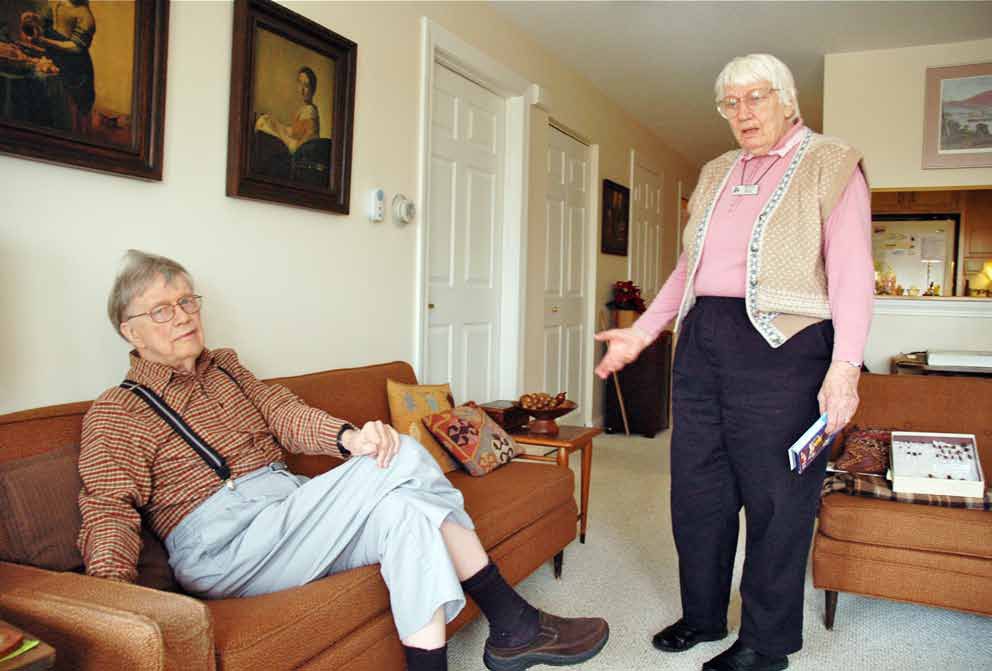
Joyce Bell, an American entomologist, devoted her life to the study of insects together with her husband. The scientist inspired many students to build a career in entomology and natural science. She showed that women can reach great heights in science. Read more on queens.name.
Education and scientific career
Joyce Elaine Rockenbach was born and raised in Queens. She decided to become a nurse and teacher due to the support of her grandfather, who believed in professional opportunities for women. She earned her bachelor’s degree from Queens College, part of the City University of New York, a multi-level public college system.
For 8 years, Joyce worked as a research fellow at the Vagelos College of Physicians and Surgeons of Columbia University in New York. The scientist received her master’s degree at the University of Vermont in Burlington (Vermont). For 10 years, Joyce taught at the nursing school of this university.
In 1957, Joyce Rockenbach married Ross Bell, an entomologist at the University of Vermont, who was born in Champaign, Illinois. Ross Bell’s interest in insects began as a child when his parents gave him an insect collection kit.
The couple worked on entomological taxonomy together. Joyce specialized in microscopy. In the 1960s, the couple began an active program of documenting Vermont’s arthropod fauna. In the 1970s, scientists expanded the geographical boundaries of their research to New Zealand and Papua New Guinea, the countries of Oceania. They studied entomology even after retirement.
It is worth noting that although entomology focuses on the study of insects, it sometimes also involves the study of other terrestrial arthropods. Thus, entomologists may study arachnids or cryptids.
Main achievements
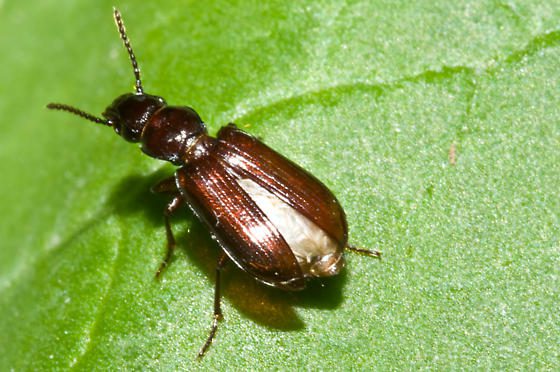
During their careers, the couple described more than 75% of the Rhysodinae species known to science. Rhysodinae are beetles that have size from 5 to 8 mm and range in color from red-brown to black. The antennae are short, bead-like and the lower jaws have no cutting edges and are non-functional. The front legs are short and strong. Adults and larvae live in moist rotten wood affected by slime mold. Adults do not dig holes. They simply make their way through the layers of decayed wood, leaving almost no traces. Larvae live in short wooden tunnels. Rhysodinae can be found on all forested continents, especially New Guinea, Indonesia, the Philippines and northern South America.
At the University of Vermont, the Bells made extensive natural history records. They created a scientific foundation for the study of arthropods in Vermont and Oceania and contributed to the proper identification of insect specimens. For 8 years, during the summer season, they rented houses in the researched places to gather collections.
For 3 years, scientists studied the area around Mount Mansfield, the highest mountain in the state of Vermont. They also spent summers collecting in northeastern Vermont around Willoughby Lake, in southern Vermont near Manchester and elsewhere in the state. During the summer evenings, the couple often set up so-called light traps for insects, which allowed them to collect rare specimens, such as the Platypatrobus lacustris beetle.
Ross and Joyce Bell have been important figures in American entomology for many years. In 1992, the Vermont Entomological Society (VES) appeared, which they joined. Moreover, Ross Bell became one of its first presidents.