Until the 21st century, scientists explored only 5% of the world ocean, while it occupies more than 70% of the surface of our planet. Water bodies have been studied less than the nearest space. Therefore, most species of living organisms are still unknown to mankind. However, some information has been obtained thanks to oceanologists. They study the processes of circulation in the water environment, its optical, acoustic, magnetic and other features, patterns of interaction between the atmosphere and the ocean, etc. They also study the earth’s crust within the ocean, the relief of its bottom, as well as the formation of mineral deposits. A great contribution to this branch of science was made by Robert Thunell. Read more about him on queens.name.
Academic and scientific career
Robert Carl Thunell was born on February 16, 1951 in Queens. He earned a bachelor’s degree in geology/biology from the prestigious Brown University in Rhode Island. This institution is a member of the Ivy League, an association of the 8 oldest American universities (the name comes from the ivy branches that wrap around the old university buildings).
Thunell received his doctorate from the University of Rhode Island Graduate School of Oceanography. For some time, he worked as a postdoctoral student at Woods Hole Oceanographic Institution. Here, Robert first started working with foraminifera. These are the simplest marine and freshwater organisms. They were collected in sedimentary traps of the tropical Atlantic, the central part of the Pacific Ocean and the Panama Basin. In parallel, Thunell studied ocean chemistry and sedimentary rocks.
In 1983, he became an associate professor and a professor in 1987. From 1985 to 1988, Thunell served as Director of the Graduate School of Geology at the University of South Carolina. After gaining enough experience, Robert headed the Department of Geological Sciences.
In 1987, Thunell became a member of the Geological Society of America, a non-profit organization dedicated to the advancement of Earth sciences. In 2004, the oceanologist became director of the Marine Science Program at the University of South Carolina. His primary role was to manage the merger of the Department of Ocean and the Environment, the Marine Science Program and the School of the Earth. Thunell successfully coped with a difficult mission. In 2011–2018, the scientist worked as a senior assistant to the dean of the Faculty for Natural Science.
Over a 40-year career, Robert Thunell received more than 45 research grants, which he used to support graduate students, postdoctoral fellows and undergraduates. He constantly looked after the interests of his students and helped them in every possible way during their research and career advancement. Thunell’s students became successful academics, government officials, members of non-governmental organizations, etc.
The door to Thunell’s lab was always open. The scientist gladly received employees and students, drank coffee with them, shared pleasant news and funny stories. He was an extremely sociable person.
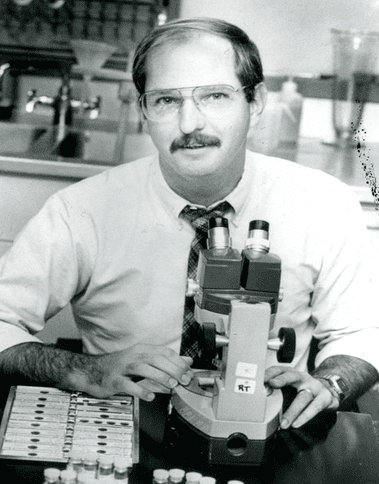
Thunell was also known as a tireless promoter of ocean science at the national and international levels. The oceanologist was a member of many scientific groups, special committees and editorial boards of scientific journals.
Main achievements
Expeditionary research in oceanology is possible thanks to specially equipped research vessels, oceanographic platforms, underwater vehicles and electronic measuring equipment. This is how Robert Thunell made his most important discoveries. His scientific contributions have led to breakthroughs that have had a significant impact on our understanding of how the Earth has changed over time.
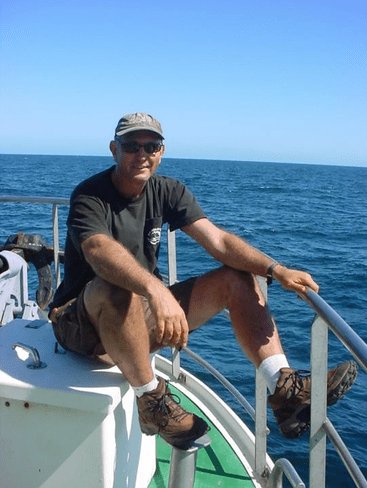
Given his many administrative and teaching responsibilities, it is impressive how Robert Thunell managed to join research trips around the world. He has published more than 230 journal articles and book chapters on the ocean.
Thunell devoted a lot of attention to the study of the rocks of the Caribbean and Mediterranean seas, the Gulf of Mexico and the Gulf of California. He also spent a lot of time in Italy, the Arctic, the South China Sea, the Sulu Sea, the Gulf of Aden, the Panama Basin and the Indonesian Throughflow.
10 interesting facts about the World Ocean
- The world ocean existed billions of years ago.
- For the first time, people learned its scale in the era of Great Geographical Discoveries. In the 16th century, the Portuguese navigator Ferdinand Magellan made the first successful circumnavigation in history, during which he died.
- The first scientific expedition to explore the world ocean was conducted by the British in 1872.
- The world ocean contains 96% of all water on the planet.
- The largest share of oxygen for the Earth is produced by plant organisms in the ocean.
- The flora and fauna of the world ocean are the main source of food for half of humanity,
- Light can penetrate deep into the ocean for a maximum of 1 km. Its average depth is about 4 km. It is difficult to explore the bottom because of the impenetrable darkness.
- There are 7 underwater waterfalls in the world ocean. The largest is about 4 km high and is located between Greenland and Iceland.
- Sound in water is spread approximately 5 times faster than in air.
- The largest fish in the ocean is the whale shark and the largest marine mammal is the whale.