The contrasting foliage and unique forms of Queens’ landscape create a lush natural tapestry that perfectly complements the local architecture. The borough has hundreds of green spaces that are used for recreation and activities. A wide variety of native and exotic trees grow in parks and amidst the bustling streets. They not only add to the visual aesthetic but also have important cultural and ecological value. The local climate is particularly good for the growth of the Common maple, the London Plane and the Bradford pear. Read more about these and other common trees in Queens on queens.name.
Common maple
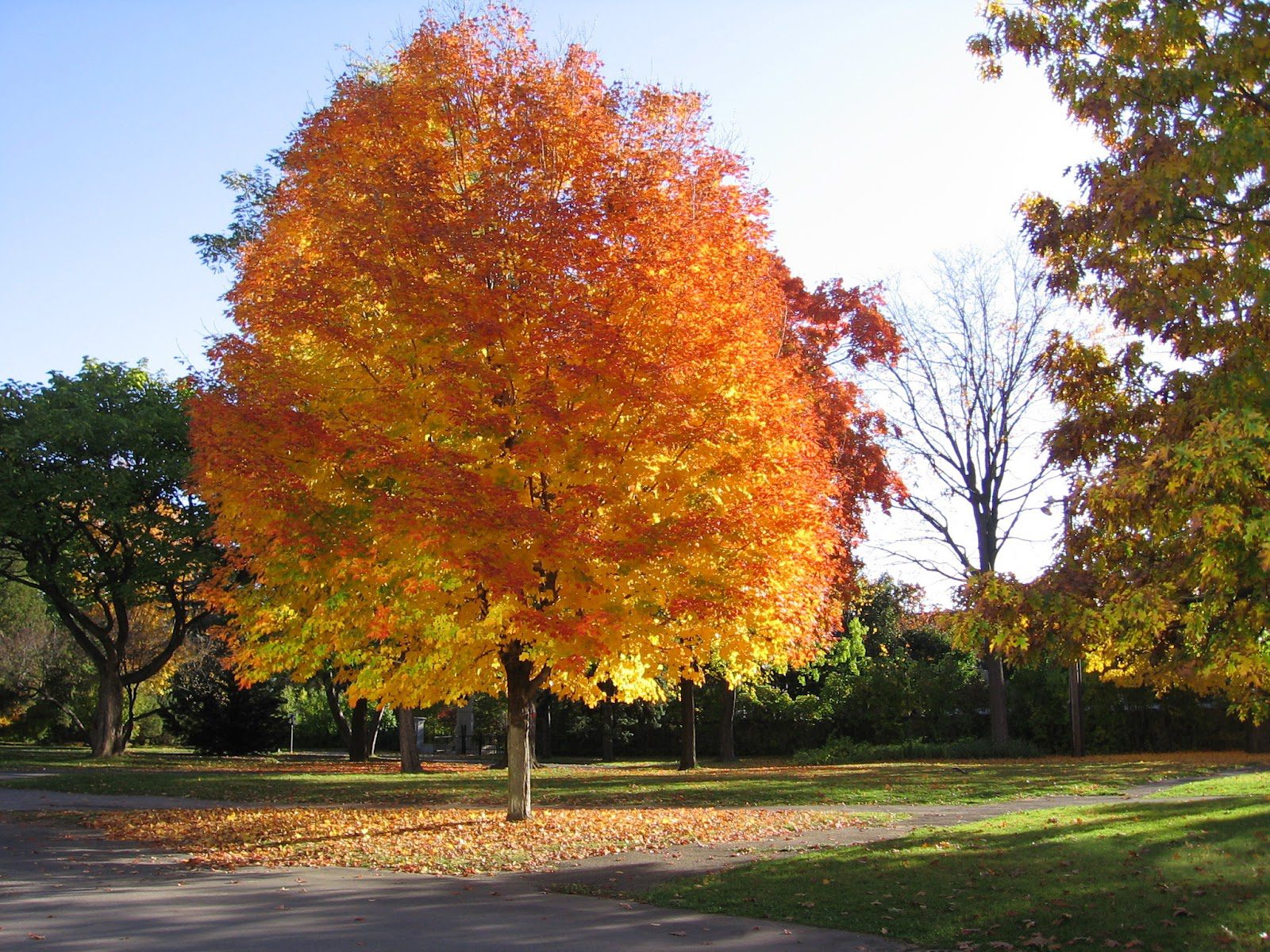
The common maple, also known as the sycamore or the plane tree, is native to Europe and Western Asia. This tall tree (20 to 30 m) has bright green, lobed leaves that turn yellow or red in the fall. In the United States, the common maple is grown as an ornamental shade tree. It is invasive, meaning it has been introduced from abroad and has spread naturally or through human intervention. Such alien trees, despite their many benefits, pose a significant threat to the flora and fauna of certain ecosystems, as they can often displace native species. Common maples produce large numbers of seeds that are carried by the wind to nearby areas. This creates a problem for native plants.
The first documented import of the sharp-leaved maple into North America was in 1756. Then, John Bartram obtained seedlings from England and began cultivating the species in his garden and nursery in Philadelphia. Shortly thereafter, common maples appeared in nursery catalogs in New York and California. In Queens, common maples are popular in parks and gardens because of their tall trunks, as well as their tolerance to compacted soil, limited root space, shade and polluted air. Varieties with dark purple leaves are often cultivated in residential areas. However, the sharp-leafed maple is susceptible to fungal diseases and is rarely grown commercially, as gray squirrels like to strip the bark.
London Plane
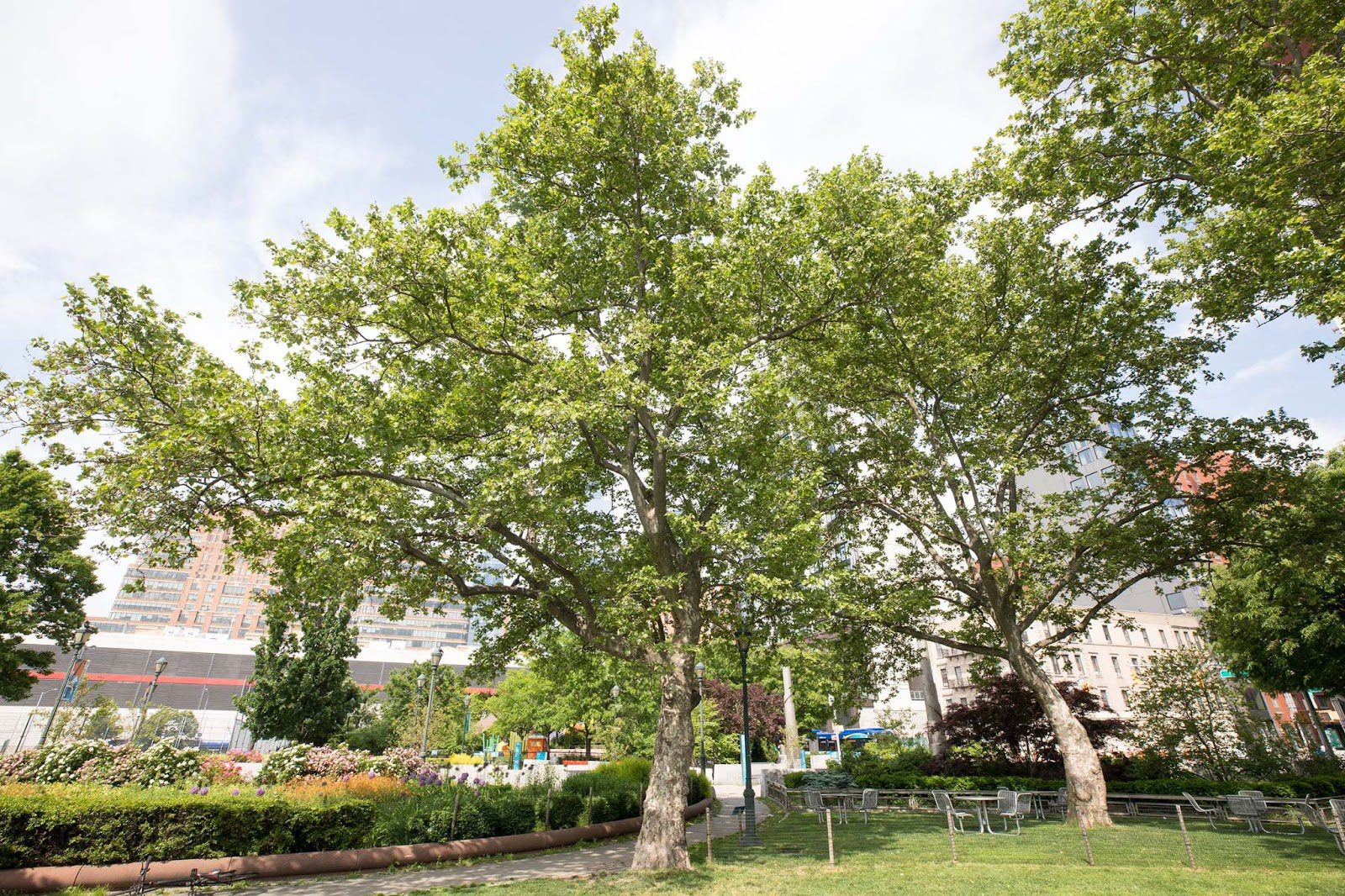
This is another tree that reaches a height of 20–40 m and is well tolerant of pollution, making it suitable for cities. In spring, the London Plane produces barely noticeable red flowers. After wind pollination, they develop into spiny fruits containing a dense cluster of seeds with stiff hairs. The fruits slowly disintegrate during the winter, releasing the seeds. Finches, goldfinches and squirrels are often seen on the trees. The bark is usually pale gray-green, smooth and flaking, or light brown, which does not flak. The leaves are thick and stiff, broad and similar to maples. The London Plane is believed to be a hybrid of the Eastern and Western plane trees, both of which were once introduced to Britain. According to one version, the new species was discovered there.
The London Plane can often be found in parks and roadsides in Queens, as it has ornamental and park value. It is easily recognized by its colorful bark and large crown. As already noted, it is an especially popular choice for cities, as the tree is durable, withstands compacted soil and atmospheric pollution.
Bradford pear
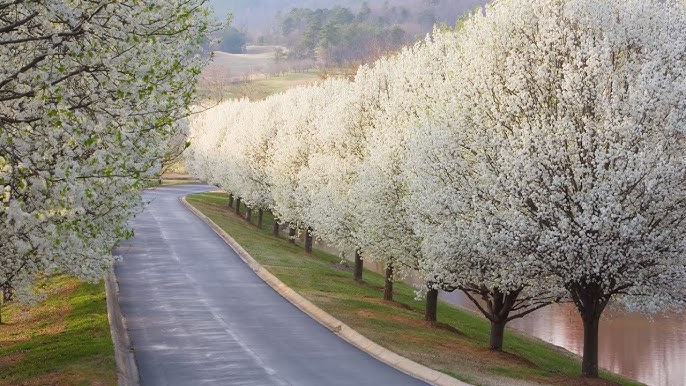
This tree comes from China. In the United States, it is considered invasive. Although the Bradford pear is not self-pollinating, thanks to cross-pollinators it produces fruit. Native trees have a hard time competing with it, as it can quickly fill gaps in open spaces, crowding out other plants. The fruits are tiny and almost woody. They become soft only after the first frost. Birds eagerly eat them.
Compared to the previous trees on the list, this one is short, 5-8 m. The tree is known for its strong aroma and snow-white blossoms in spring. It is a favorite of landscape designers because of its bright appearance. These plants grow quickly on any type of soil. Callery pears, as they are also called, are extremely resistant to disease. However, some varieties are susceptible to damage from storms and can even die due to strong winds, snow or ice storms.
Due to its adaptability to a variety of soil types and acidity, as well as drainage and air pollution levels, the Bradford pear is a popular urban tree. In Queens, it is most often seen along roadsides. These trees prefer sunny locations. They can also be found in partially shaded habitats.
Honey locust
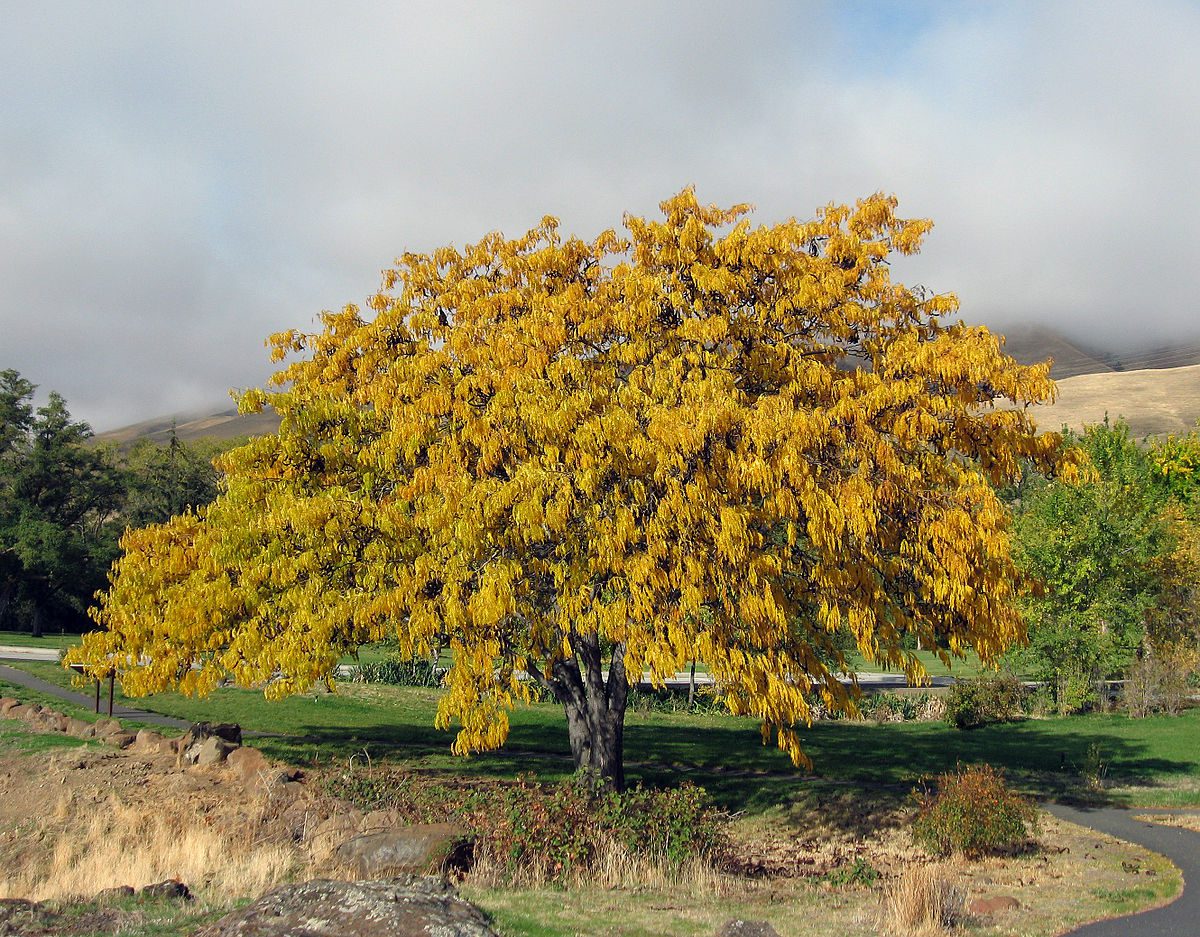
Gleditsia triacanthos is native to central North America. The tree is well-adapted to a variety of environments and has become established in almost all parts of the world. Outside its native range, it can be a harmful invasive species. Honey locust grows quickly but can live up to 125 years. The leaves are green in summer and change color in the fall from cream and brown to golden yellow. The strongly scented flowers appear in late spring. Each raceme is an inflorescence with many tiny flowers ranging from greenish-yellow to greenish-white. The height of the tree reaches from 15 to 40 m. It is widely used in urban forestry due to its resistance to saline environments, heat and drought. It is easily recognized by its long seed pods, which look like beans. These pods contain sweet pulp, which makes them a favorite food of deer and cattle.
By the way, in Queens, some of the most exotic trees in the world can be found in Kissena Park. Located in the Flushing district, along the underground river Kissena Creek, it is a wonderful place to relax by the lake. Kissena Lake, surrounded by weeping willows, creates an idyllic atmosphere for enjoying a sunny day. Stroll through the park to see the lush flora and fauna. Don’t miss the historic grove with exotic trees.
Mulberry
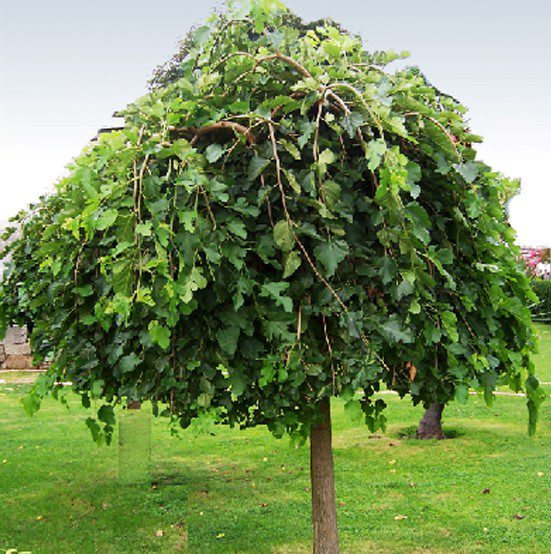
Mulberry is a light-loving plant that is resistant to frost, drought, dust and gases. It is valued for its delicious edible fruits, as well as its exquisite decorative appeal. The plant originates from China. There, it was grown for silk production. The leaves are eaten by the silkworm, a caterpillar whose pupa is coiled from silk thread. This caterpillar lives on the mulberry tree and gives people an indispensable product, as well as the name of the tree.
The mulberry tree grows very quickly at first, but with age this process stops. The tree can reach a height of 9 to 20 m. Dwarf varieties grow only up to 3 m. Mulberry is a long-lived tree. Its average lifespan is about 200 years and up to 500 in good conditions. The tree bears fruit annually and quite abundantly. The berries are perishable and do not tolerate transportation, especially over long distances. They should only be stored in a plastic bag in the refrigerator for three days to preserve their taste and appearance. To extend this period, the fruits must be frozen or dried.
This tree is cultivated in many regions of the world with a temperate climate, in Europe, South Africa and America. In the USA, it is considered an invasive species. In Queens, mulberries can be seen in backyards, in yards and on the streets.