When asked about famous biologists, many people think about Charles Darwin. However, he is not the only one who has studied life in all its details. Biology is one of the most interesting and diverse branches of science. Biologists help us better understand how human activity affects the natural world, how species evolve and how our bodies work. Zahra Zakeri has made many groundbreaking discoveries. Read more about the famous Queens scientist on queens.name.
Curious since childhood
As Zahra Zakeri told Nature magazine, she has been interested in how everything in the world works since childhood. At the age of 5, she asked her father what was between them. At first, he did not understand what the girl was asking about. Later, he realized that she was interested in air. Dad was surprised that a child of that age was asking such difficult questions. Given her curiosity, Zahra decided to devote her life to science. Her genetics teacher, Leslie Lewis, offered the talented student a job in the laboratory. There, Zakeri began her scientific career.
Cell death: the main topic of research
Specializing in cell and molecular biology at Columbia University, Zahra Zakeri worked on heat shock and the formation of gene expression, as well as their regulation during the development of certain pathological conditions. Once during her research, Zakeri had a discussion with Richard Lockshin, an American cell biologist known for his work in the field of apoptosis (the most common type of programmed cell death). Thanks to a conversation with Lockshin, the biologist came to the conclusion that some of the methods she used directly relate to whether cells die or remain alive. Around 1983, Zakeri began working closely with Lockshin and other researchers on cell death. After Columbia, Zakeri joined Rutgers University and Queens College.

One of Zakeri’s most important discoveries was the realization that not all cells die in the same way. In general, cell death is a biological event that occurs after a cell has ceased to perform its functions. This can be caused by the natural processes of old cell death, as well as various diseases, injuries, etc. Therefore, cell death can occur both normally and in the case of pathology. This process is a fundamental aspect of embryonic development, normal cell metabolism and maintenance of homeostasis. It is directly related to diseases such as AIDS, cancer, Alzheimer’s disease, etc. Therefore, this area is very important to study.
During the development of the fetus in the womb, cell death shapes and affects the functioning of almost all organs. Without cell death, there would be no embryo. However, too much or too little cell death can be harmful to it. Altering the correct pattern of cell death can often lead to developmental defects, including affecting the nervous system, cleft palate and other issues.
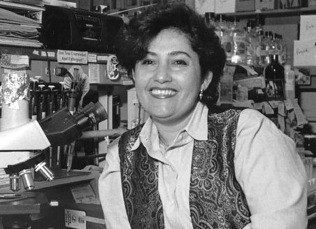
In her own lab, Zakeri studied the mechanisms of cell death, trying to figure out what specific signals determine a cell’s need for death, how these signals are transmitted through the cell, which genes or factors they affect and what specific steps initiate cell death. The research has used molecular and cellular methodologies in conjunction with animal studies. Zakeri’s lab used mouse embryos, as well as insects such as the tobacco budworm and Drosophila, to study normal and abnormal patterns of cell death.
However, several important questions remain to be answered. Scientists have not yet understood how a cell’s fate can be controlled, whether it survives or dies. Knowledge of the basic regulation can help. To solve the problem, much needs to be learned about the immediate triggers and the interaction of metabolic pathways with them.
Other achievements
The Gordon Research Conferences are a group of international scientific conferences organized by the non-profit organization, which is engaged in advanced research in the chemical, physical and biological sciences. The conferences have been held in the United States since 1931, in picturesque and isolated natural locations that reflect the informal atmosphere of the community. Zahra Zakeri and Richard Lockshin initiated a series dedicated to cell death within these conferences, the ICDS & Gordon Conference. Their proposal was gladly accepted by the Gordon Research Conferences organization. In 1995, the first scientific meeting was held. Its main topic was cell death.
In 1995, Zakeri helped found the International Cell Death Society, which publishes research and clinical information on cell death, including apoptosis, autophagy, necrosis, necroptosis, etc. In addition, the biologist helped found Scientists Without Borders for Education, which promotes science in underdeveloped countries and promotes the active participation of women in this field.