

Park · Queens · ⭐ 9.3/10 · 7411 reviews · updated: 2026-08-04 20:07:34
Address: P535+M5, Woodhaven, NY 11421, United States
Forest Park — the glacial ridge where Queens keeps its old oak woods
A wooded spine runs across the middle of Queens along a ridge left behind by an ice sheet, and on it stands 543 acres of park with the largest continuous forest in the borough at its heart — roughly 165 acres of oak and hickory, some of it well over 150 years old. Underneath the trees the ground is lumpy and irregular, full of hollows and hummocks, because this is a terminal moraine: rubble dumped along the ice front of the Wisconsin glacier about twenty thousand years ago. Threaded through it are a hand-carved carousel from around 1903, a golf course older than the Queens borough itself, seven miles of bridle paths, a bandshell that has held summer concerts for generations, and a kettle pond that birders across the northeastern United States know by name.
Highlights
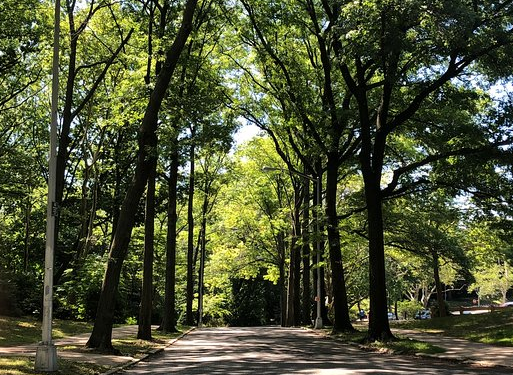
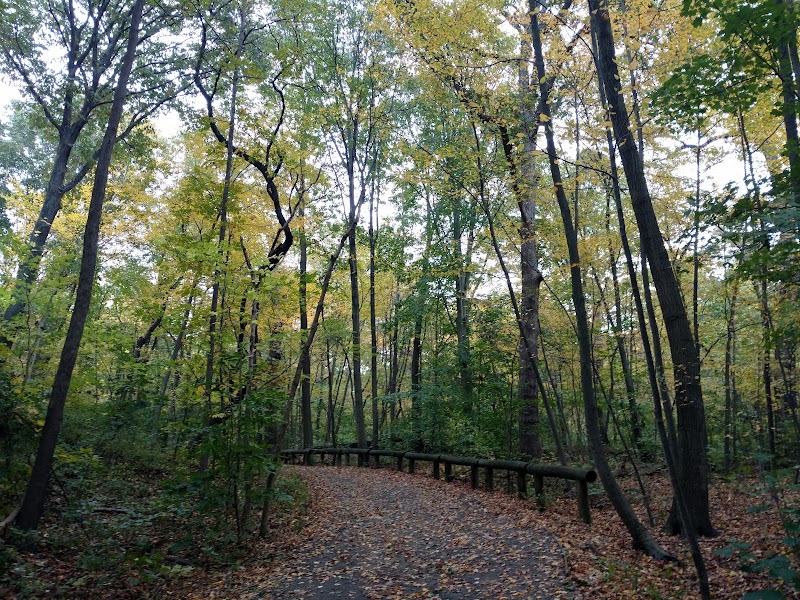
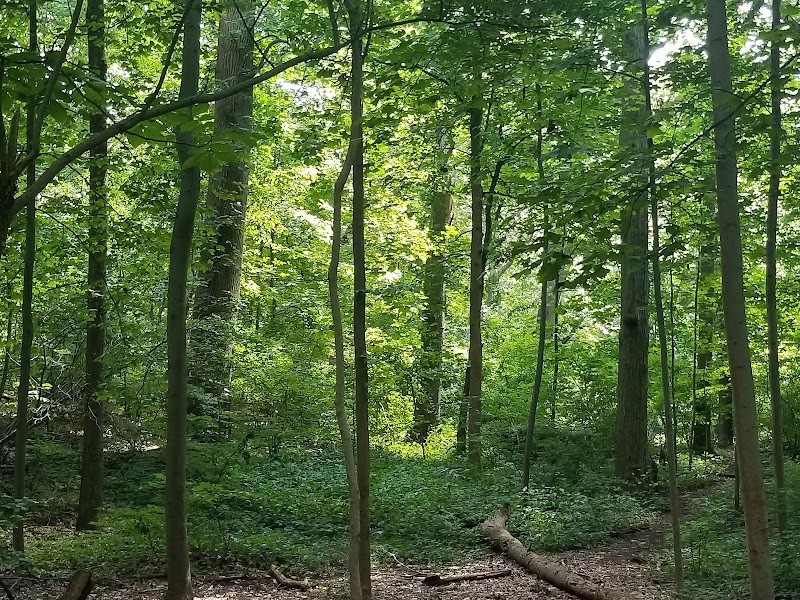
- The oak forest — about 165 acres of continuous mature woodland, the largest unbroken forest tract in Queens, protected as a Forever Wild preserve. Many of the oaks and hickories predate the park itself, and the canopy is dense enough in summer to drop the temperature noticeably as you step in.
- The Forest Park Carousel — hand-carved around 1903 by Daniel Carl Muller of D.C. Muller & Brother, one of only two known surviving Muller carousels anywhere. It carries 52 figures: 36 jumping horses, 13 standing horses, three menagerie animals — a lion, a deer and a tiger — and two chariots, with real horsehair tails and glass eyes, turning to an Andreas Ruth und Sohn band organ. Listed on the National Register in 2004, it became an individual New York City landmark in June 2013 — the first carousel in the city ever designated.
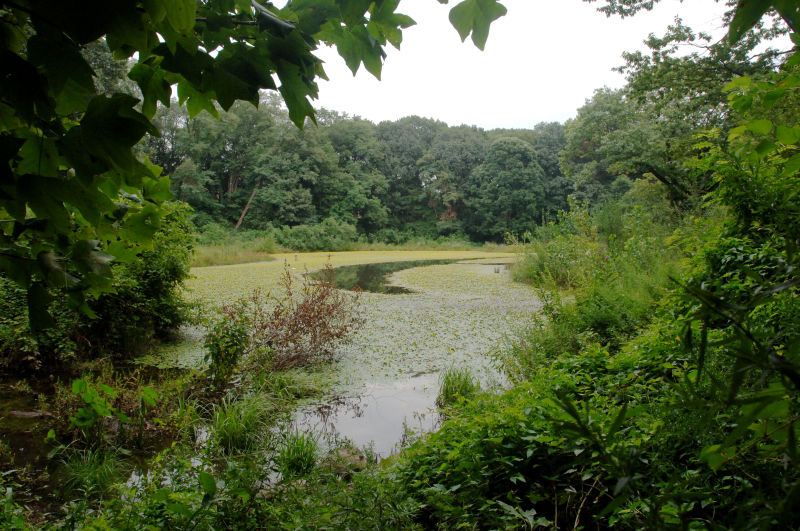
- The Water Hole — a vernal kettle pond in the eastern woods and one of the most celebrated migration spots in the region. Just over 200 species have been recorded across the park, including some 36 kinds of warbler, and birders come specifically for the close views this small pool gives of songbirds dropping in to drink and bathe.
- Forest Park Golf Course — first laid out in the 1890s to a plan by Tom Bendelow and expanded to eighteen holes by 1905, making it one of the oldest public courses in New York City. It was substantially redesigned by Stephen Kay in the 1990s and rolls straight over the moraine’s humps and hollows.
- The bridle paths — around seven miles of them, a survival of the era when riding was ordinary in Queens and still the reason horses appear under these trees.
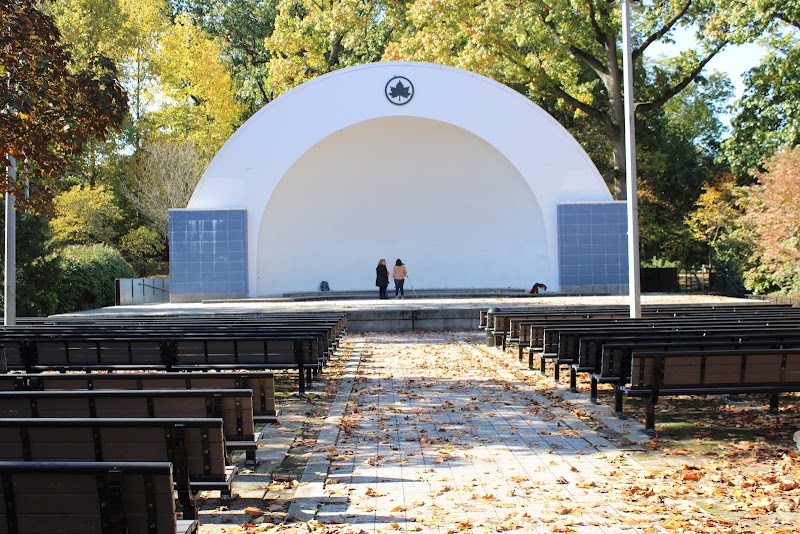
- The George Seuffert Sr. Bandshell — named for the bandleader whose family conducted here for decades, a near-century-old open-air venue that still anchors the free summer concert season.
What you’ll find
Forest Park is the third-largest park in Queens and the tenth-largest in New York City, and it splits naturally into an eastern half that is mostly forest and an active western half with the golf course, ballfields and bandshell. Forest Park Drive runs the ridge from end to end, carrying a segment of the Brooklyn–Queens Greenway, and the woodland trails hang off it on both sides.
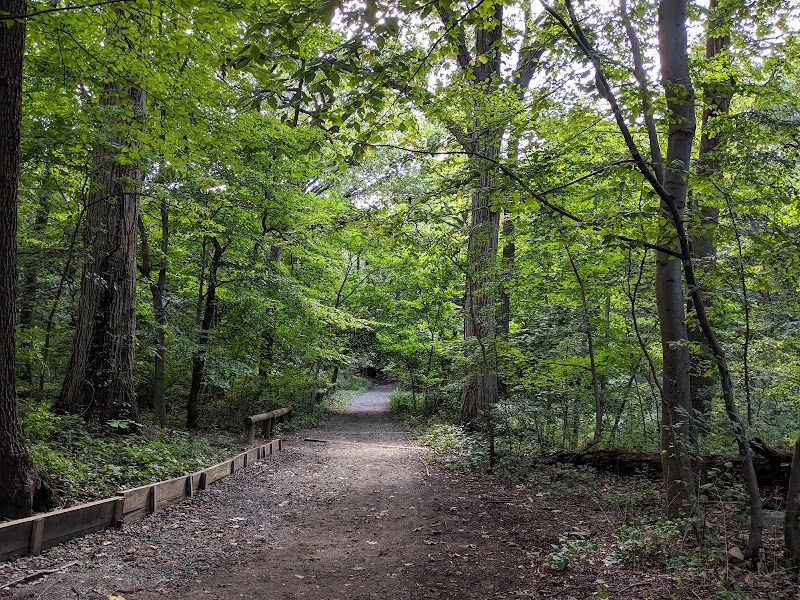
- Three marked hiking trails: a Yellow loop of about a mile through the northern woods past the vernal pond; an Orange trail of roughly 2.4 miles around the forest perimeter and through the Pine Grove; and a Blue loop of about 1.75 miles that crosses both the bridle path and the Orange route.
- Strack Pond, a glacial kettle that was filled for ballfields in 1966, flooded chronically, and was restored to open water and wetland in 2004 — one of the more satisfying reversals in the city’s park history.
- The Gully, a large glacial depression of roughly ninety acres, notoriously good for skulking warblers and thrushes in migration.
- Victory Field on the northern edge, with a running track and ballfields, plus tennis courts, playgrounds and picnic groves scattered along the drive.
- The Pine Grove, a stand of mature conifers unusual for Queens and reliable for Pine Warblers and winter mixed flocks.
- Neighborhood edges on all sides — Woodhaven, Richmond Hill, Kew Gardens, Glendale and Forest Hills all press up against the park, which is why it functions as a genuine backyard rather than a destination.
Things to do — and who it’s for
- Birders — the single best migration woodland in Queens: over 200 recorded species, some 36 warblers, and a vernal pond that puts them at eye level in May.
- Hikers and trail runners — three signed loops on genuinely uneven glacial ground, which makes for far more interesting footing than the city’s usual flat paths.
- Families with young children — the historic carousel, playgrounds and shaded picnic groves make a low-effort, high-reward afternoon.
- Golfers — a public eighteen-hole course with real elevation change, more than a century of history, and none of the flatness that defines most municipal golf here.
- Cyclists — a paved greenway segment along the ridge, connecting into the wider Brooklyn–Queens Greenway for longer rides.
- Concert-goers — free summer programming at the Seuffert Bandshell, an outdoor tradition here that goes back to the early twentieth century.
Getting there & practical
The park lies across central Queens between Woodhaven, Richmond Hill, Kew Gardens, Glendale and Forest Hills, and different corners of it are reached by different lines. The J and Z trains stop at Woodhaven Boulevard for the western end, near the golf course and bandshell; the E and F trains reach Kew Gardens–Union Turnpike for the eastern woods and the carousel side. Buses running along the park’s edges include the Q11, the Q52 SBS and the Q53 SBS, along with the Q37, Q54, Q55 and Q56, and it is unusual to be more than a few minutes’ walk from a stop anywhere along the perimeter. Entry to the park and all its trails is free. Golf, tennis court time and carousel rides are ticketed separately, and the carousel runs a seasonal schedule rather than year-round. The grounds are open daily from early morning until 1 a.m., but the woodland trails are strictly a daylight proposition — there is no lighting under the canopy. Allow two hours for a trail loop with time to stand still and look; a full morning if you are birding in spring.
When to visit
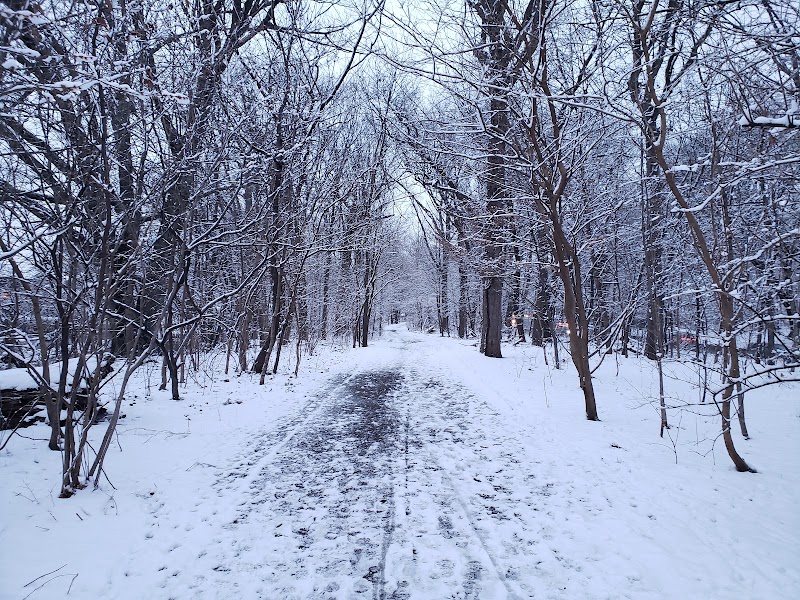
Spring is the reason serious visitors come. Through late April and May the migration pours through the moraine, and the Water Hole and Strack Pond fill with warblers, vireos and thrushes — near enough every species of those families that occurs in the northeastern United States has been logged here. Summer turns the park into deep shade and noise: the carousel spins, the bandshell fills, the golf course is busy from dawn, and the forest interior stays measurably cooler than the streets around it. Autumn brings a second migration and the best colour in Queens, with oak and hickory turning gold and bronze across the ridge and the trails at their driest and most walkable. Winter opens the woods up completely — sightlines run for hundreds of feet, screech owls and great horned owls become findable, woodpeckers work the bare trunks, and after real snow the bridle paths and forest drive make for excellent quiet walking.
Good to know
The land was bought between 1895 and 1898, for roughly 1.3 million dollars, by the City of Brooklyn — Queens was not yet part of New York City — and the landscape survey work was carried out by the firm Olmsted, Olmsted & Eliot, successors to Frederick Law Olmsted’s practice. What made the site worth buying was its geology. Forest Park sits on the Harbor Hill Moraine, the terminal ridge of the Wisconsin ice sheet, laid down about twenty thousand years ago and running the length of Long Island; the resulting knob-and-kettle terrain gave the park hills, hollows and depressions that were too awkward to farm or build on and therefore stayed wooded. Those depressions include the kettle ponds. Strack Pond had a particularly bad twentieth century: in 1966 it was filled in and turned into two ballfields, which promptly and repeatedly flooded as the ground settled and runoff poured off the surrounding slopes, until the Parks Department’s Natural Resources Group restored it as wetland and open water, reopening it to the public in 2004. Jackson Pond was filled in the same era. The park’s built attractions have their own long histories. Golf arrived in the 1890s with a nine-hole layout by Tom Bendelow that had grown to eighteen holes by 1905, making it one of the oldest municipal courses in the city; Stephen Kay redesigned it in the mid-1990s. The carousel is older still in spirit than in residence: the Muller machine now standing here was carved around 1903 and spent about half a century at Lakeview Amusement Park in Dracut, Massachusetts, operated by the Barbuti family, before being brought to Queens in 1972–73 to replace Forest Park’s previous carousel, which burned on December 10, 1966 under circumstances never satisfactorily explained. The replacement turned out to be a treasure: one of just two known surviving carousels by D.C. Muller & Brother, with 52 hand-carved figures, glass eyes and real horsehair, listed on the National Register in 2004 and made an individual New York City landmark in June 2013 — the first carousel in the city to receive that protection. The forest itself is now managed as a Forever Wild nature preserve, and the volunteer and stewardship groups working here spend most of their effort on the same two things: keeping invasive vines off the old oaks, and keeping the kettle ponds wet.
Visitor tips
- Come at dawn in the first half of May if you want the park at its best. Migrant songbirds are most active in the hours after first light, and the Water Hole gives closer views than almost anywhere else in the city.
- Wear real shoes on the trails. This is glacial rubble, not graded parkland — the ground is uneven, roots are everywhere, and the low spots hold water for days after rain.
- Check the carousel’s operating season before promising it to a child. It runs seasonally rather than year-round, and it is worth timing a visit around, given what it is.
Questions & answers
Is Forest Park free? Yes. The park, its woodland, all three marked trails, the bridle paths and the greenway segment are free and open daily from early morning until 1 a.m. Golf, tennis court time and carousel rides are ticketed separately.
How big is the forest? The park covers 543 acres in total, and roughly 165 acres of that is continuous mature oak and hickory woodland — the largest unbroken forest tract in Queens, with many trees over 150 years old. It is protected as a Forever Wild preserve.
What makes the carousel special? It was hand-carved around 1903 by Daniel Carl Muller and is one of only two known surviving carousels by D.C. Muller & Brother. It has 52 figures — 36 jumpers, 13 standers, a lion, a deer, a tiger and two chariots — with glass eyes and real horsehair tails. It joined the National Register in 2004 and became the first carousel designated an individual New York City landmark, in June 2013.
Which trails are there and how long are they? Three marked loops. The Yellow trail is about a mile through the northern woods and passes the vernal pond. The Orange trail runs roughly 2.4 miles around the forest perimeter and through the Pine Grove. The Blue trail is about 1.75 miles and intersects both the bridle path and the Orange route.
Why is the ground so uneven? Because the park sits on the Harbor Hill Moraine — the rubble ridge left along the front of the Wisconsin ice sheet roughly twenty thousand years ago. That knob-and-kettle terrain also produced the park’s kettle ponds, which is why they hold water in hollows with no stream feeding them.
Is it really that good for birding? Yes. Just over 200 species have been recorded in the park, including around 36 species of warbler, and effectively every warbler, vireo and thrush that occurs in the northeastern United States has turned up here. The Water Hole, Strack Pond, the Gully and the Pine Grove are the classic spots.
How old is the golf course? It dates to the 1890s, when a nine-hole layout by Tom Bendelow opened, and it had grown to eighteen holes by 1905 — among the oldest public courses in New York City. Stephen Kay redesigned it in the mid-1990s.
How do I get there by subway? Take the J or Z to Woodhaven Boulevard for the western end near the golf course and bandshell, or the E or F to Kew Gardens–Union Turnpike for the eastern woodland. Numerous buses, including the Q11, Q52 SBS, Q53 SBS, Q37, Q54, Q55 and Q56, run along the park’s edges.
Can you ride a horse here? The park retains around seven miles of bridle paths, a survival from when riding was commonplace in this part of Queens, and horses still appear on them. Availability depends on the stables operating nearby at any given time, so check locally before planning a ride.
Photos
Show 1 more photos
Visitor reviews
Reviews last updated: 2026-08-04 20:07:34
Data is refreshed monthly. Sources: queens.name and editorial picks based on reviews.
Great place to walk, hike and run…Make sure to stop and enjoy! Definetly recomended!!
If you’re going on a nature walk, I definitely recommend this place. You could see interesting things, collect some sticks, and nice rocks.
Running through Forest Park as a beginner, I felt like I'd found a hidden refuge right in the middle of the city. The trails are surprisingly peaceful, with long stretches of shaded paths that let you stay comfortable ev…
If you need a place to clear your head, Forest Park is it. It has beautiful, winding trails for bird watching and nature walks, plus Victory Field provides a well-maintained space to get a solid run in. It’s my go-to sp…
This is the tenth-largest park in New York and the third-largest in Queens. It consists of 543 acres of flatland and hills, plus trails from easy to difficult and 165 acres of forest. It provides oxygen, shelter, work, w…