

Park · Queens · ⭐ 9.3/10 · 4425 reviews · updated: 2026-08-04 20:07:37
Address: Kissena Blvd and, Booth Memorial Ave, Fresh Meadows, NY 11365, United States
Kissena Park — a nursery of rare trees, a lake with a Chippewa name, and the city’s last bike track
Kissena Park is what happens when a nineteenth-century plant nursery is left to grow up into a park. Roughly 235 acres in Flushing, it holds a spring-fed lake named with a Chippewa word, a fourteen-acre grove of exotic trees that a Quaker horticulturist planted in the 1870s and that nobody properly noticed again until 1981, a banked asphalt oval that is the only bicycle racing track left in New York City, an eighteen-hole New Deal golf course, and a long green corridor that runs west toward Flushing Meadows on the roadbed of a railway that lasted six years. It is one of the most botanically interesting parks in the five boroughs, and most of the people jogging around the lake have no idea.
Highlights
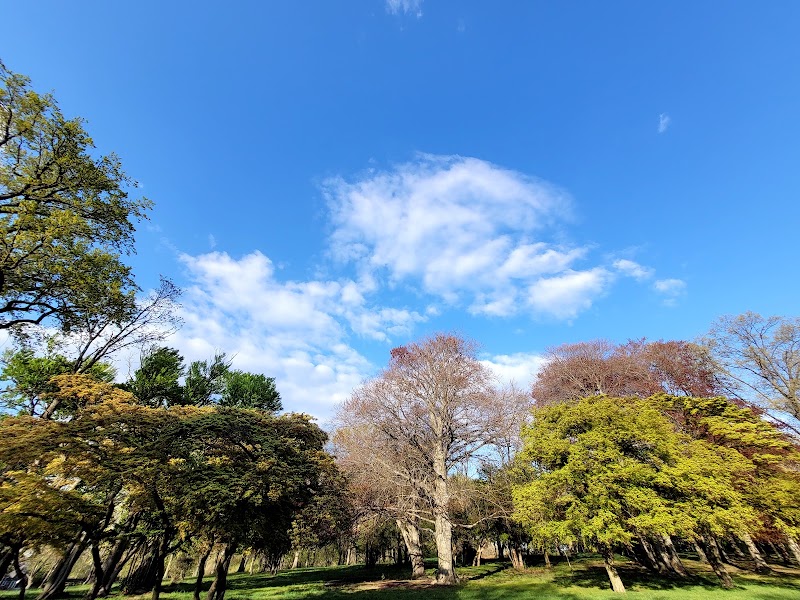
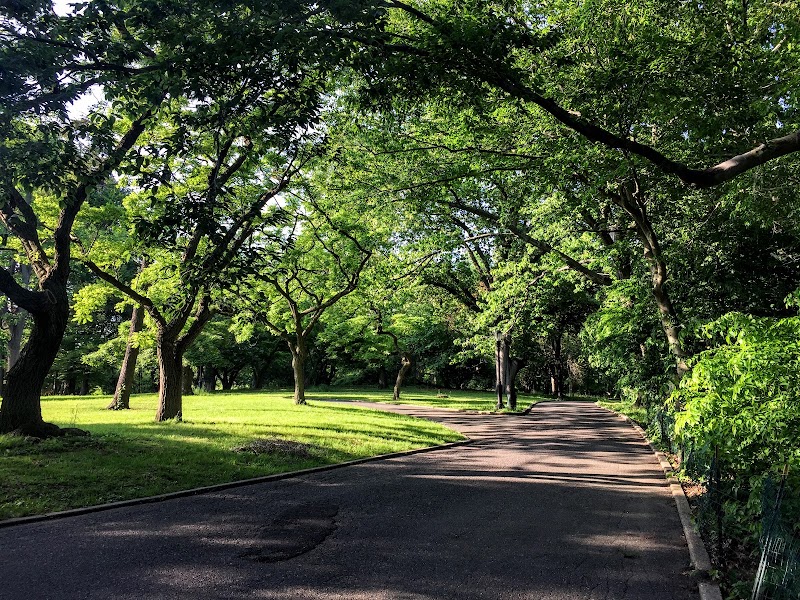
- The Historic Grove — about fourteen acres of surviving nursery stock from Samuel Bowne Parsons’s operation, with well over a hundred tree varieties, including a Persian parrotia (Parrotia persica), Chinese toon (Toona sinensis), castor-aralia (Kalopanax), bald cypress (Taxodium distichum), European beech and Japanese maples, plus climbing wisteria threading through it all.
- Kissena Velodrome — a 400-metre banked asphalt oval with roughly fifteen degrees of banking, built in 1962, used for the 1964 Olympic trials, and today the only bicycle track left in New York City. Its Wednesday Twilight racing series has run since 1965, and the free Star Track youth programme has taught city children to race here since 2004.
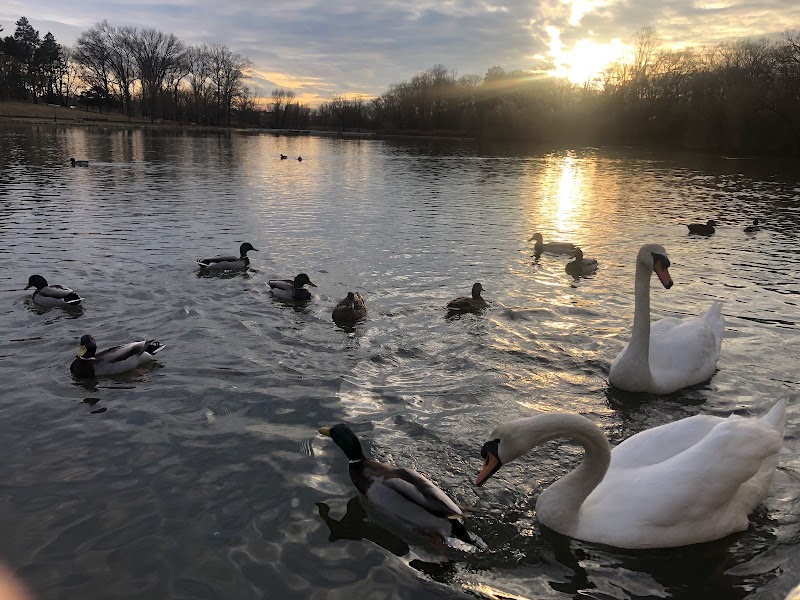
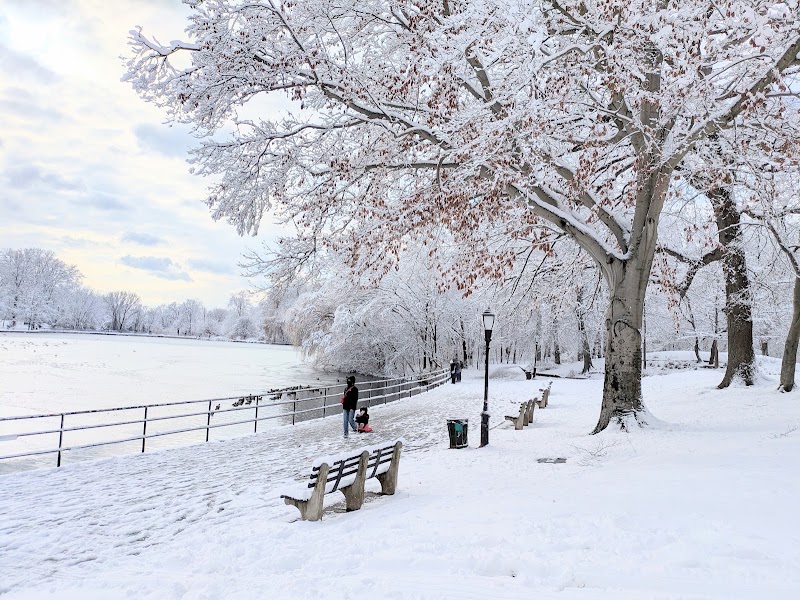
- Kissena Lake — the spring-fed heart of the park, encased in concrete by a Works Progress Administration project in 1942 and given back a naturalistic edge in a restoration completed in the early 2000s that swapped city water for well water, added aeration and built a small island for wildlife.
- The Kissena Corridor — a long green strip approved in 1940 that follows the abandoned roadbed of Alexander T. Stewart’s Central Railroad of Long Island and links the park west toward Flushing Meadows Corona Park and east toward Cunningham Park, forming part of the forty-mile Brooklyn–Queens Greenway.
- Kissena Park Golf Course — an eighteen-hole, par-64 short course designed by John Van Kleek and opened in 1935, built with New Deal relief funding and still one of the city’s most approachable public courses.
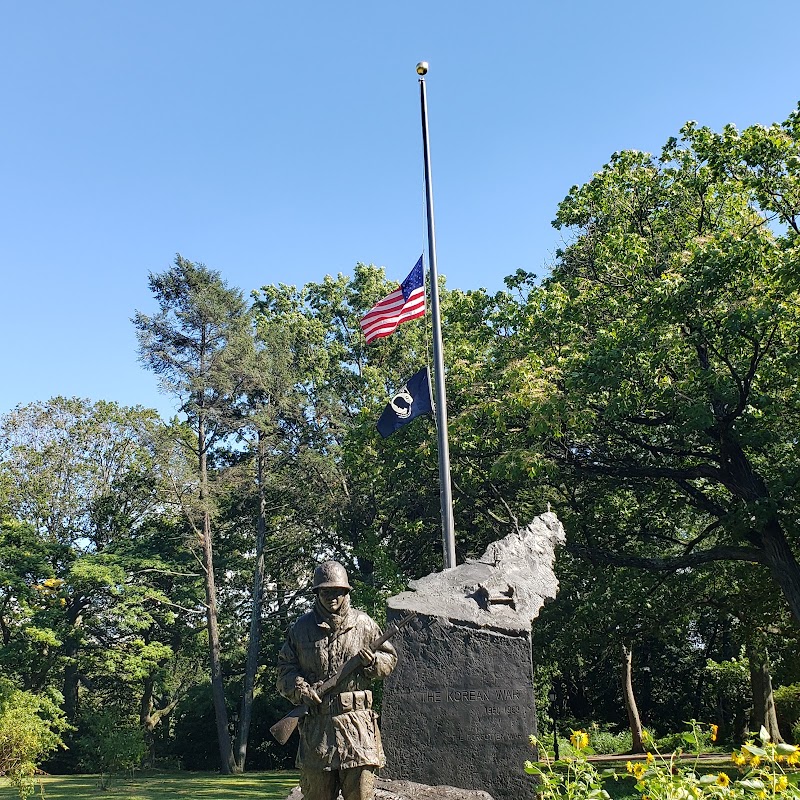
- The war memorials — a World War I memorial dating from 1921 and a Korean War memorial dedicated in 2007, the latter reflecting the Korean-American community that has shaped this part of Flushing.
What you’ll find
Kissena works as a series of distinct rooms rather than one big lawn: lake, grove, sports fields, velodrome, golf course and corridor, each with its own crowd. The lakeside loop is the social spine — walkers, tai chi groups, anglers and strollers move around it all day — while the grove immediately behind it feels like a different park entirely.
- A paved loop around Kissena Lake with a boardwalk section, benches and open water views.
- Nature trails through the Historic Grove and the wooded slopes, unpaved and quiet.
- Baseball diamonds, soccer fields, tennis courts, playgrounds and bike paths.
- The velodrome, open for racing and organised sessions in season and a landmark in its own right the rest of the year.
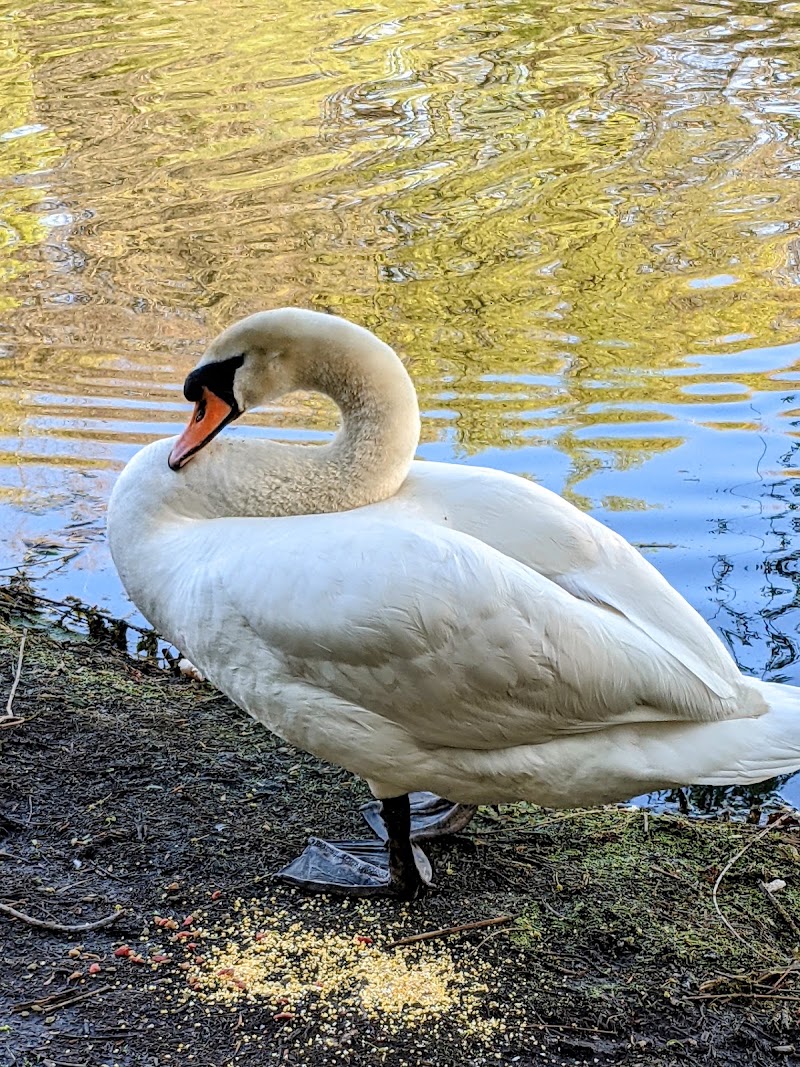
- Fishing at the lake on a catch-and-release basis, with turtles, cormorants and herons for company.
- A birding reputation that punches well above the park’s size, thanks to the mix of open water, marshy edges, brush and mature canopy.
Things to do — and who it’s for
- Cyclists and track racers — the velodrome is the only place in New York City to ride a banked track, with a long-running weekly racing series and a free youth programme.
- Tree people and gardeners — the Historic Grove is effectively an accidental arboretum, and the rarities in it are the direct descendants of a nursery that supplied Frederick Law Olmsted.
- Birdwatchers — the lake holds Wood Duck, Northern Shoveler, Hooded Merganser, Double-crested Cormorant and Great Blue Heron; summer brings breeding Willow Flycatcher, Eastern Kingbird, Warbling Vireo, Wood Thrush, Cedar Waxwing, Yellow Warbler, American Redstart and both Baltimore and Orchard Orioles.
- Walkers and families — the lake loop is short, flat, shaded and endlessly sociable, and the playgrounds sit within easy reach of it.
- Golfers — the short course is forgiving, quick to play and well suited to beginners or to anyone who wants eighteen holes without a five-hour commitment.
- Long-distance walkers and cyclists — the corridor lets you leave the park and keep going, west toward Flushing Meadows or east toward Cunningham Park, without returning to traffic for long stretches.
Getting there & practical
Kissena Park sits in central Flushing, and the practical gateway is the transit hub at Flushing–Main Street, served by the 7 train at its eastern terminus and by the Long Island Rail Road’s Port Washington Branch. From there, the Q17, Q25, Q27, Q34, Q44 and Q65 buses fan out toward the park, with the ride taking around fifteen to twenty minutes depending on the route and the traffic; the Q17 is the most direct for the lake side. The western end of the Kissena Corridor is walkable from Flushing–Main Street in about a quarter of an hour, which is a pleasant way to arrive on foot. There are small parking areas plus street parking around the edges, busiest at weekends. Entry is free, there are no gates, and the park keeps standard city park hours. The velodrome, the golf course and the tennis courts each run their own seasons and schedules — the track’s racing programme is a warm-weather affair, and the golf course opens for the golf season. Trails through the grove are unpaved and can be muddy. Allow an hour for the lake and the grove, half a day if you plan to ride, play or walk the corridor.
When to visit
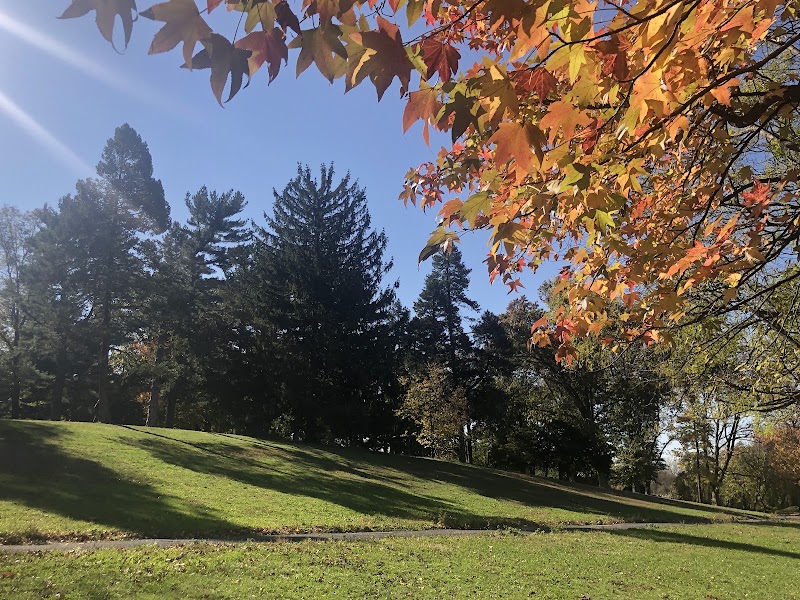
Spring is the park’s showpiece: the grove’s magnolias and exotic ornamentals flower before most of Queens has noticed the season change, migrating warblers, tanagers and orioles drop into the trees, and the lake fills with birdsong. Summer belongs to the velodrome and the lakeside — evening races, families circling the water, and deep shade under the old nursery canopy on hot afternoons. Autumn is arguably the best of all, because the Historic Grove was assembled from species chosen for ornamental effect, so the colour is more varied than in a native woodland; fall migration is also unusually productive here, with Yellow-bellied Sapsucker, Purple Finch and Orange-crowned Warbler regular. Winter opens up the lake for waterfowl watching, brings Fox Sparrow into the brush and Great Horned Owl into the taller trees, and lets you see the shape of the rarer trees without their leaves.
Good to know
The park owes almost everything to one family. Samuel Bowne Parsons (1819–1906) ran a nursery here from the early 1870s, importing over a hundred varieties of exotic trees; his firm was the first American nursery to introduce Japanese maples and to propagate rhododendron commercially, and it supplied Frederick Law Olmsted with stock for Central Park and Prospect Park. Parsons named the lake “Kissena” from a Chippewa word meaning “it is cold” or “cool water” — very probably the only Chippewa place name in New York State. His son, Samuel Parsons Jr., went on to become superintendent of New York’s parks and a founding figure of the American Society of Landscape Architects, so the family shaped the city’s green space twice over. The nursery closed in 1901, and after Parsons’s death in 1906 the family sold part of the land to the city. The surviving specimens were then more or less forgotten until 1981, when a Parks horticulturist, Shelly Stiles, set out with a group of interns to clear two overgrown acres and realised she was standing in the remains of the nursery; the fourteen-acre Historic Grove dates its protection from that discovery. The lake has had a rougher ride: a natural pond with an arched bridge that resembled Central Park’s Gapstow Bridge, it was concreted into a “bathtub lake” by a WPA project in 1942 and the bridge demolished, and only in a restoration completed in the early 2000s was it given well water, aeration, a naturalistic edge and a wildlife island. The velodrome dates from 1962, built under Robert Moses; it hosted the 1964 Olympic trials and drew crowds during the World’s Fair era, fell into serious disrepair by the 1980s, and was rebuilt and rededicated in the early 2000s with a new banked asphalt surface, with further pathway reconstruction announced in 2022. The Kissena Corridor, approved in 1940, follows the roadbed of the Central Railroad of Long Island, which Alexander T. Stewart built in 1873 to serve his new town of Garden City and which carried passengers for only six years, until 1879 — a spur toward Creedmoor lingered until 1955.
Visitor tips
- Go into the grove. Most visitors circle the lake and leave, but the fourteen acres of old nursery stock immediately behind it are the reason this park matters — and they are quiet even on a busy Saturday.
- Check the velodrome schedule before you bring a bike expecting to ride the track. Racing and organised sessions run in the warm months and the surface is not an open-access path.
- Use the corridor as a route, not just a park. Walking or riding west from Kissena toward Flushing Meadows follows a railway that has been gone for well over a century and gives you a completely traffic-free way across a dense part of Queens.
Questions & answers
What does “Kissena” mean? It comes from a Chippewa word usually translated as “it is cold” or “cool water”, applied to the lake by the nurseryman Samuel Bowne Parsons in the nineteenth century. It is very likely the only Chippewa place name in New York State.
Can anyone ride the velodrome? Not as a casual drop-in. The 400-metre banked track hosts racing and organised sessions during the warm season, including the Wednesday Twilight series that has run since 1965 and the free Star Track youth programme founded in 2004; check the current schedule and requirements before turning up with a bike.
What is the Historic Grove and can I walk in it? Yes — it is roughly fourteen acres of surviving trees from Parsons’s nursery, threaded with paths, and it is open to walk through. Expect unpaved, sometimes muddy ground and more than a hundred tree varieties, some of them genuinely rare in North America.
Can I fish in Kissena Lake? Fishing is catch-and-release, and anyone aged sixteen or over needs a New York State freshwater fishing licence. There is no swimming and no boat rental.
Is there a golf course? Yes — Kissena Park Golf Course, an eighteen-hole par-64 short course designed by John Van Kleek and opened in 1935, built with New Deal relief funding. It plays quickly and suits beginners.
How do I get here on public transport? Take the 7 train or the Long Island Rail Road to Flushing–Main Street, then the Q17, Q25, Q27, Q34, Q44 or Q65 bus. Alternatively, walk east along the Kissena Corridor from Flushing–Main Street in about fifteen minutes.
Is it a good park for birdwatching? Very. The mix of open water, marshy edges, brush and mature canopy delivers wintering waterfowl, a strong spring and autumn migration, breeding orioles and warblers in summer, and year-round Red-tailed Hawks, woodpeckers and American Goldfinch.
Is the park suitable for children and older visitors? Yes. The lake loop is flat, short, shaded and paved, playgrounds sit close to it, and benches are frequent — it is one of the easiest parks in Flushing to walk at any pace.
Photos
Show 1 more photos
Visitor reviews
Reviews last updated: 2026-08-04 20:07:37
Data is refreshed monthly. Sources: queens.name and editorial picks based on reviews.
Гарний парк зі ставком. Бачили черепах і їли морозиво з вантажівки. Повернулися б ще раз.
Це дуже гарний парк. Там є дитячі майданчики. Зазвичай там чоловіки грають у бочче. Можна прогулятися навколо озера, там є качки та багато черепах. Завжди є люди, які ловлять рибу, але рибу доводиться викидати назад. Баг…
Чудовий парк! Багато пішохідних та бігових доріжок. Дика природа всюди. Футбольний майданчик, риболовля дозволена в озері, дуже жваво. Багато місць, де можна постояти, зазвичай не здається, що тут переповнено. Найкращі м…
Затишне місце в районі Квінз. Озеро невелике, але там є черепахи та качки, дітям воно дуже подобається. Велодром — єдиний у місті — класно спостерігати, навіть якщо не їздиш на велосипеді. Дитячі майданчики чисті, резуль…
Чудове місце для відпочинку з родиною. Парк просторий, чистий та дуже доглянутий. Тут є зелені зони, ідеальні для пікніків, дитячий майданчик та спокійна атмосфера, де можна насолодитися природою. Ідеально підходить для…